Current logged as moderate: reading an entry explains what that word means here.
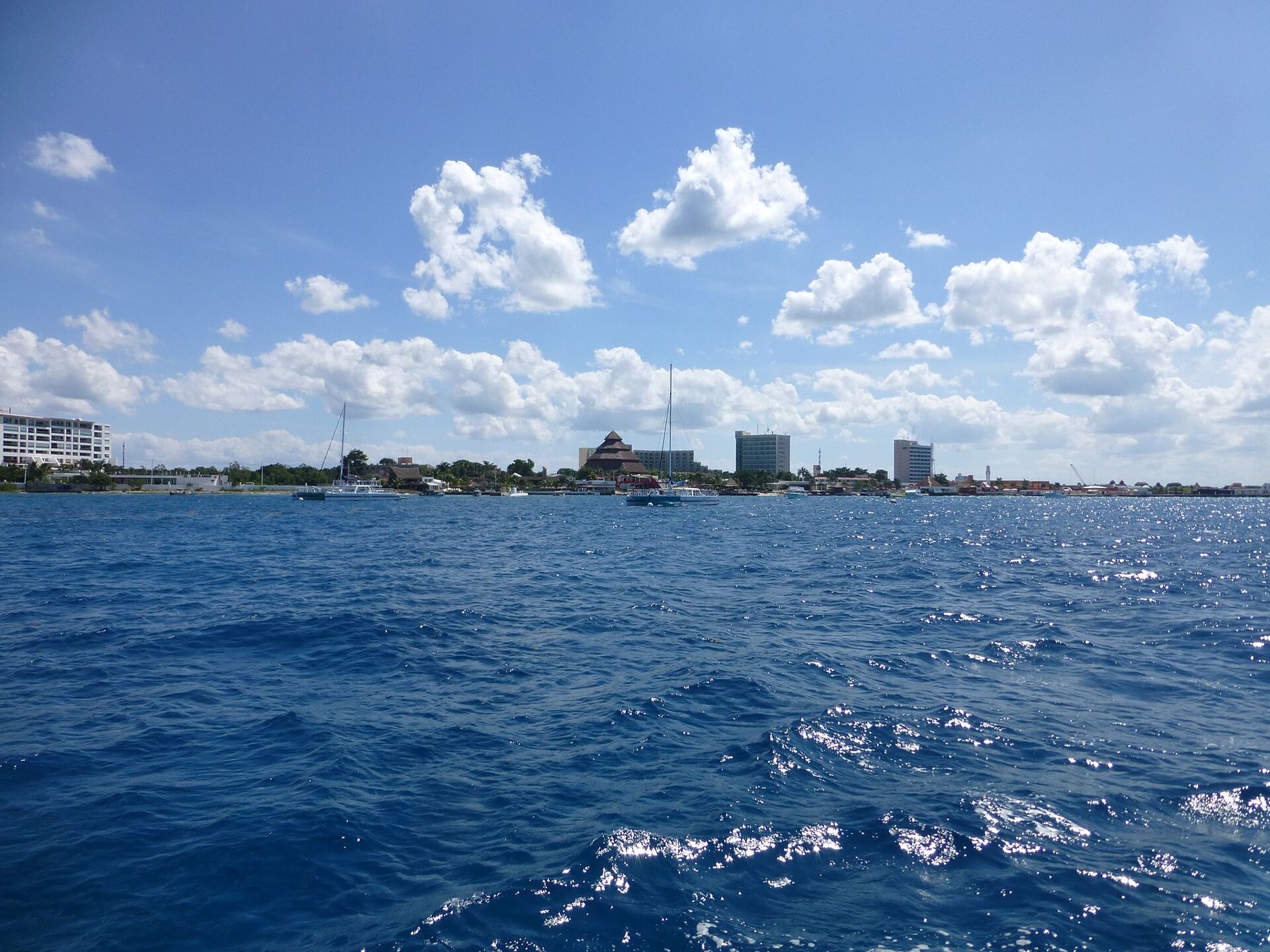
The channel between Playa del Carmen and Cozumel is deep, blue and usually choppy, with the island's low profile visible from the mainland beach. For most visitors heading to the reefs, the route across is the passenger ferry, and the crossing is part of the day. It is short, frequent and generally straightforward, but the channel can make it bumpy, and a little preparation helps.
This entry describes the crossing in general terms. Timetables, prices and companies change, so check before you go, especially if you need to connect with a dive boat on the far side.
Where the ferries leave from
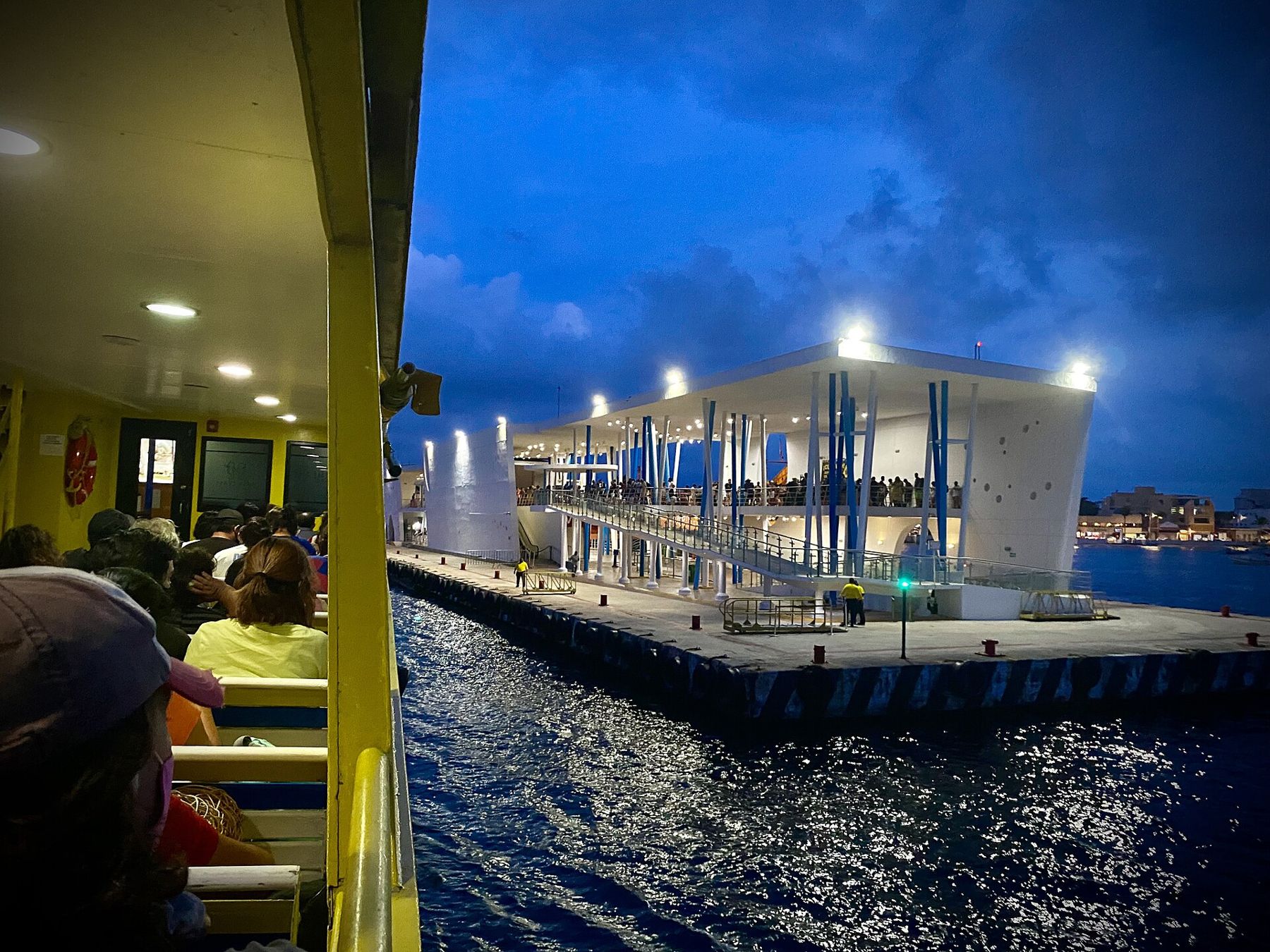
Passenger ferries leave from a pier in central Playa del Carmen, a short walk from the main pedestrian street and the town square. On the Cozumel side, they arrive at the downtown pier in San Miguel, the island's only town, right on the waterfront promenade. Both ends are walkable, which makes the ferry a convenient choice for day trips.
More than one company has run fast passenger ferries on this route over the years. Departures are usually frequent through the day, from early morning into the evening, but the schedule varies by season and day of the week. Buy tickets at the pier or from official sales points, and confirm the return time before you leave the mainland.
A separate car ferry runs from a terminal south of Playa del Carmen. It is slower and mainly used by those taking a vehicle to the island.
The crossing itself
The fast ferries usually take somewhere between thirty-five minutes and an hour, depending on the boat and the sea. The channel is deep, and a strong ocean current runs northward through it, so even on fine days there is often some swell.
Most ferries have an enclosed, air-conditioned lower deck and an open upper deck. Inside is drier and cooler, but the motion can feel stronger with no view of the horizon. Outside offers fresh air and a view, though spray is common.
The same northward current that rocks the ferry is the one that carries divers along Cozumel's reefs. The entry on how drift dives work explains how boats use it.
Swell and seasickness
Seasickness is common on this crossing, especially on windy days. A few habits help:
- Sit low and near the middle of the boat, where the motion is least.
- Look at the horizon rather than your phone or a book.
- Choose fresh air on the upper deck if you feel queasy, as long as you can stay dry and seated.
- Eat something light beforehand rather than travelling on an empty stomach or a heavy meal.
- If you take a motion-sickness remedy, take it well before the crossing, following the instructions on the pack.
If you are diving later the same day, think about how any remedy might affect you. Many make people drowsy. Mention it to your dive guide, and dive within your training and your computer's limits.
Carrying dive gear
Many divers stay on the mainland and cross to Cozumel just for the day, which means carrying a gear bag on the ferry. Bags usually go in a luggage area or under seats. Large bags may carry a separate charge, and policies vary, so check before you go.
A few practical points: pack your mask and computer in your hand luggage rather than the main bag. Keep weights out of your bag; dive operators provide them. Bring a dry layer for the return trip, when you are likely to be damp and the air conditioning is cold.
Some divers instead stay on the island for a few days, which avoids the daily crossing and leaves more time in the water. Many dive boats on Cozumel leave from piers along the west coast rather than from downtown, so allow time for a taxi to the boat if you are crossing on the morning of a dive.
When the port closes
The ferry depends on the weather. In strong winds, especially the northers that blow from late autumn into spring, the port captain can close the port to small boats and suspend ferry service. Closures can last a few hours or a day or more. Tropical storms and hurricanes in summer and autumn can also shut the route.
When the port closes, dive boats on Cozumel usually stop as well. If you have a flight or a connection to make, avoid crossing on the last possible day. The water-by-month entry describes when northers and storms are most likely.
Arriving in San Miguel
The ferry lands you on the waterfront in San Miguel, with taxis waiting near the pier. From there, the reefs off town described in the entry on the gentle reefs off San Miguel are a short ride away, and the southern reefs further down the coast.
The pier area is busy when a ferry lands, and on days when cruise ships are in port the waterfront fills further. Step to one side, get your bearings, and take a moment before heading off. If you are meeting a dive boat, agree the meeting point in advance; many boats collect divers from piers along the coast rather than from the ferry dock itself, and the walk or taxi ride between the two takes time.
The island is small, roads are simple, and the crossing back is the same in reverse. Keep an eye on the last departure of the day and on the sky. The channel decides more than the timetable does.
Who shot these frames
- Sharon Hahn Darlin, CC BY 2.0
- Clyde Charles Brown, CC BY-SA 4.0