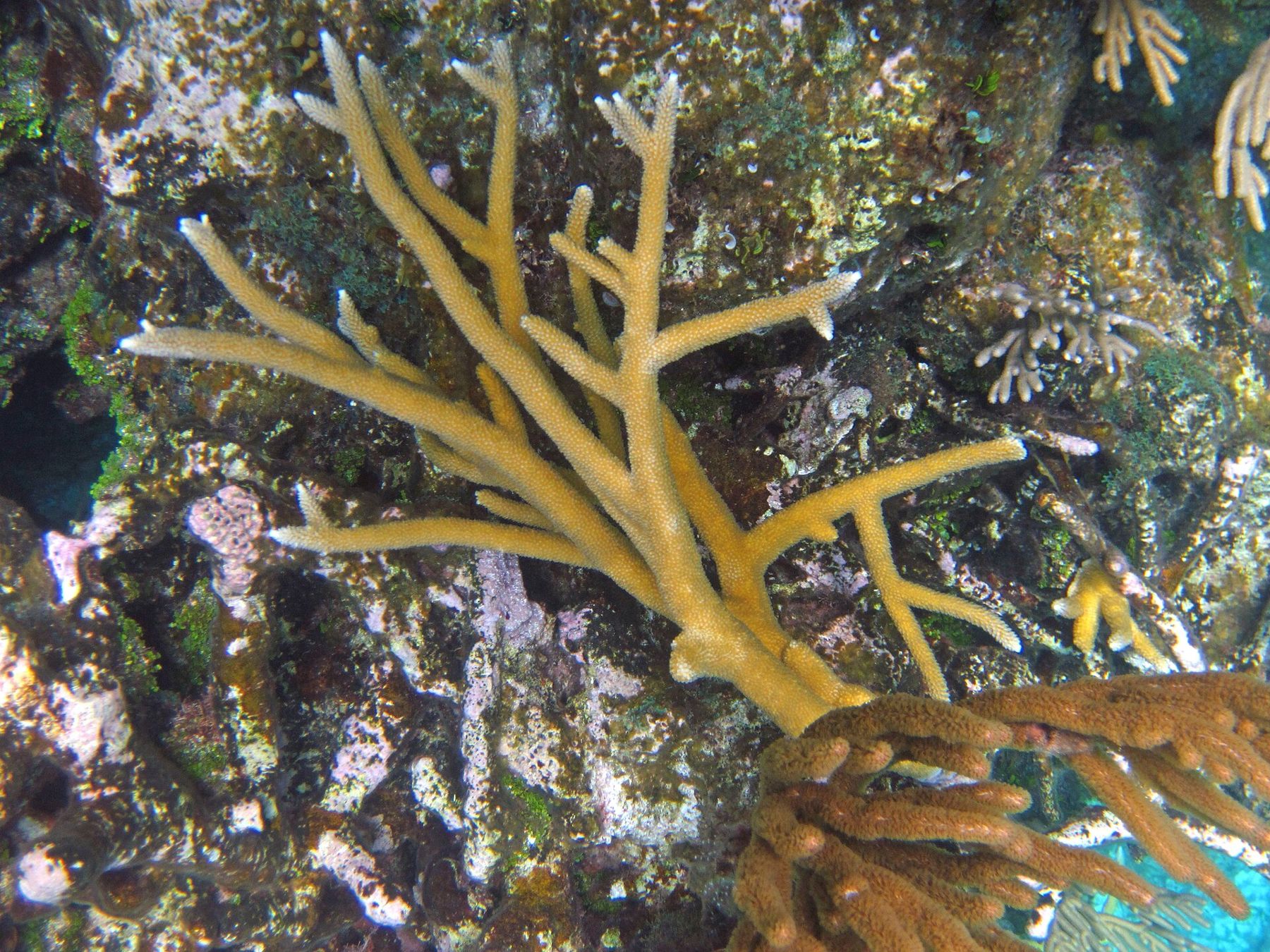
Coral grows slowly. A branch of staghorn coral may add only a few centimetres a year, a brain coral far less, and a single careless kick can undo years of growth in a second. On a quiet reef that might not matter much. On the reefs of Cozumel and the Riviera Maya, visited by many thousands of snorkellers and divers, it matters a great deal.
This entry covers the habits that keep a reef healthy: what to wear, how to protect yourself from the sun without harming the water, how to move, and what never to do. None of it is difficult, and most of it makes your time in the water better too.
Cover up first
The best sun protection is clothing. A long-sleeved rash guard or a thin wetsuit protects your back, shoulders and arms, the places snorkellers burn most, without anything washing off into the water. Leggings or a full suit protect the backs of your legs. A hat and sunglasses on the boat help as well.
Clothing also gives a little protection from stinging creatures, such as small jellyfish and fire coral, if you brush against them by accident.
Choosing sunscreen
Some chemical sunscreen ingredients, including oxybenzone, have been linked to harm in corals and other marine life. Many visitor areas in the Mexican Caribbean ask for biodegradable or reef-safe products, and some ban certain sunscreens outright. Labels such as reef-safe are not tightly regulated everywhere, so read the ingredients.
Mineral sunscreens based on zinc oxide or titanium dioxide are generally considered the gentler choice. Apply it at least twenty minutes before you get in the water, so more of it stays on your skin and less ends up in the sea. Use it on skin that clothing does not cover: face, neck, hands, the backs of your knees. Rules on sunscreen differ between parks; check before you go, and ask your operator.
Fins off the bottom
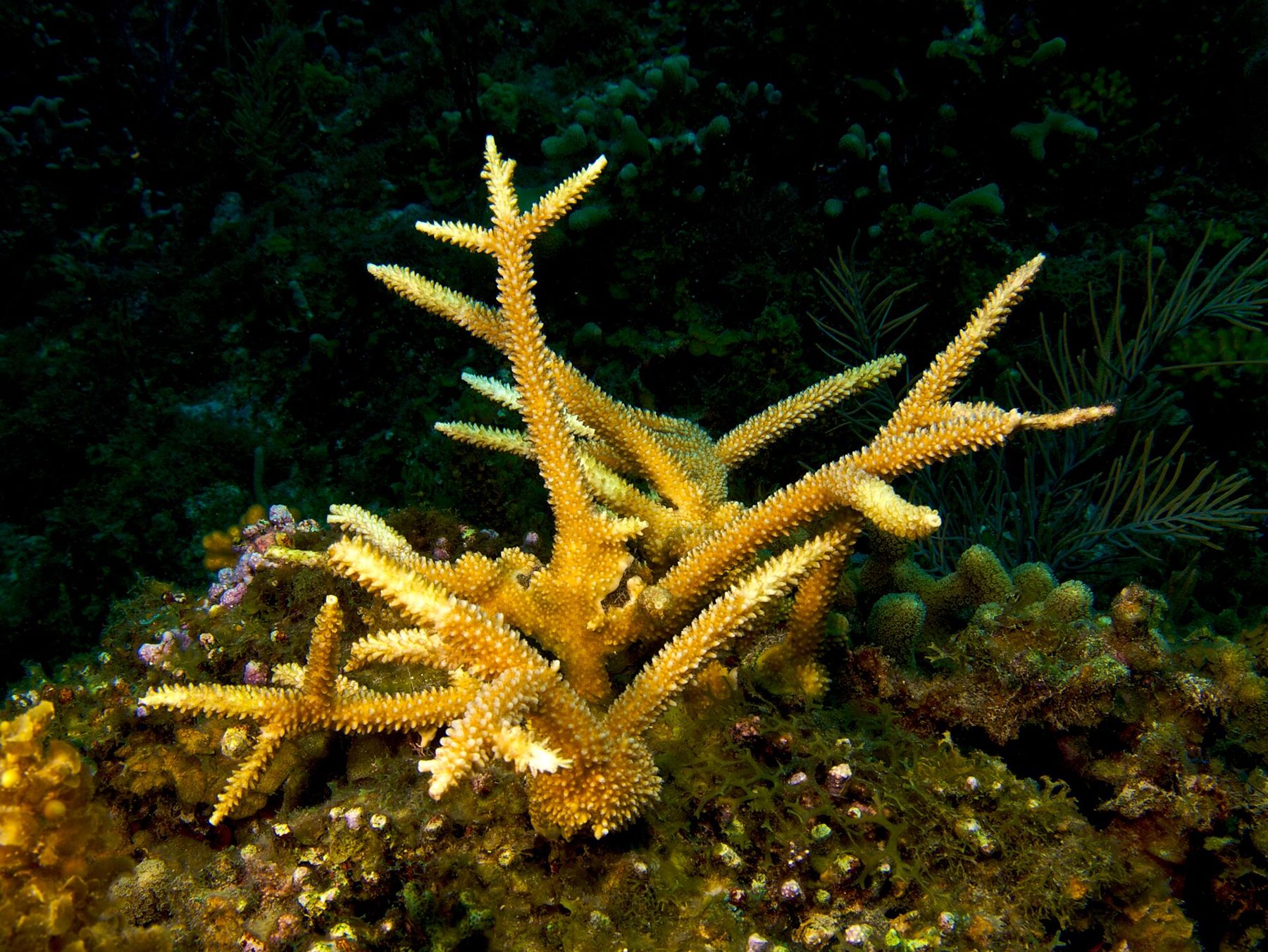
Most reef damage by visitors comes from fins. A snorkeller who stops to stand up in shallow water often stands on coral. A diver who swims with a heads-up, feet-down position kicks up sand and strikes the reef with every stroke.
For snorkellers, the answer is to float flat and stay in water deep enough that you can kick without touching anything. A life vest or a snorkel vest helps if you need to rest; then you can float without standing. If you must stand, look for bare sand first.
For divers, good trim and buoyancy are the core skills. Keep your body horizontal, with fins slightly raised, and use gentle kicks such as the frog kick near the bottom. Stay a little higher off the reef than you think you need to, especially in current; the entry on drift diving explains why. Secure gauges, octopus and camera straps so nothing dangles and drags across coral.
Hands to yourself
Coral polyps are covered in a thin layer of living tissue and mucus. Touching them can damage that layer, spread disease and leave the coral open to infection. Hands, knees and cameras pressed against the reef do real harm.
The rule is simple: do not touch anything alive. That includes coral, sponges, sea fans, turtles, rays and fish. Many parks, including the Cozumel reefs, ban gloves for exactly this reason; the entry on the marine park rules covers the details. If you need to steady yourself, find a patch of bare rock or sand, and use a single finger.
No feeding, no chasing
Feeding fish seems harmless, but it changes what they eat, how they behave and where they gather. Fed fish can become aggressive toward people and neglect their role on the reef, such as grazing on algae. Feeding is banned in most marine parks here.
Chasing animals has a similar effect. A turtle surrounded by snorkellers stops feeding and leaves. A ray followed by divers swims away. Stay still, keep your distance, and let animals come to you; the entry on Akumal's turtles describes how this works in practice.
What else damages coral
Visitors are only one pressure on the reef. Warm water causes bleaching; disease has killed many stony corals across the region; runoff, wastewater and storms add their share. You cannot fix those from a boat, but you can avoid adding to them. Choose operators who use mooring buoys rather than anchors. Do not buy coral, shells or other reef souvenirs. Take any rubbish back with you.
Be careful near fire coral, which looks like yellowish-brown crusts or upright plates and stings on contact. Avoiding it protects both the coral and you.
Photography deserves its own mention. A camera tempts people to settle on the reef for a steady shot, to move an animal into better light, or to linger in a spot until the fins start to sink. If you carry a camera, practise buoyancy without it first, keep it on a short lanyard, and take the picture you can get from where you are. No photograph is worth a broken coral head.
Leaving it as you found it
The best measure of a good reef visit is that the reef looks the same when you leave as when you arrived. A well-fitted mask means less fiddling; a rash guard means less sunscreen; good buoyancy means no kicks or scrapes. Dive within your training and your computer's limits, and listen to your guide, who knows the site and its fragile spots.
Reefs here have survived storms, heat and disease. Careful visitors give them one less thing to recover from.
Who shot these frames
- James St. John, CC BY 2.0
- Nhobgood ( · ) Nick Hobgood, CC BY-SA 3.0