Current logged as moderate: reading an entry explains what that word means here.
Palancar is not one reef. It is a band of coral several kilometres long on the southwest edge of Cozumel's shelf, and the boats that work it treat it as a set of separate dives: Palancar Gardens, Palancar Horseshoe, Palancar Caves and Palancar Bricks are the names you hear most on a briefing. Each section has its own shape, but they share one pattern. Big coral buttresses rise from white sand, the sand runs out in channels between them, and on the seaward side the buttresses fall away into deep blue water.
This log entry covers the reef in general terms. The exact site, the depth plan and whether you go at all are decided on the day by the boat captain and the dive guide, who watch the current and the weather far more closely than any guidebook can.
Reading the reef
From the surface, Palancar shows as a darker strip beyond the pale sand of the shelf. On descent you usually land on sand or on the top of a buttress, somewhere around 10 to 15 metres, with the drop-off a short swim away. The buttresses are tall and narrow, cut by sand chutes and tunnels, and in places they arch over to make short swim-throughs where light comes in from both ends.
- Gardens is usually the gentlest section, with lower, rounded coral heads and plenty of sand around them. It is a common choice for a second, shallower dive.
- Horseshoe takes its name from a curve of buttresses around a sandy bowl. The view from the middle is wide when the water is clear.
- Caves has the most tunnels and overhangs. These are short swim-throughs with open exits, not caves in the technical sense, and they are entered only on the guide's signal.
- Bricks is another named section along the same band, with its own mix of buttresses and sand.
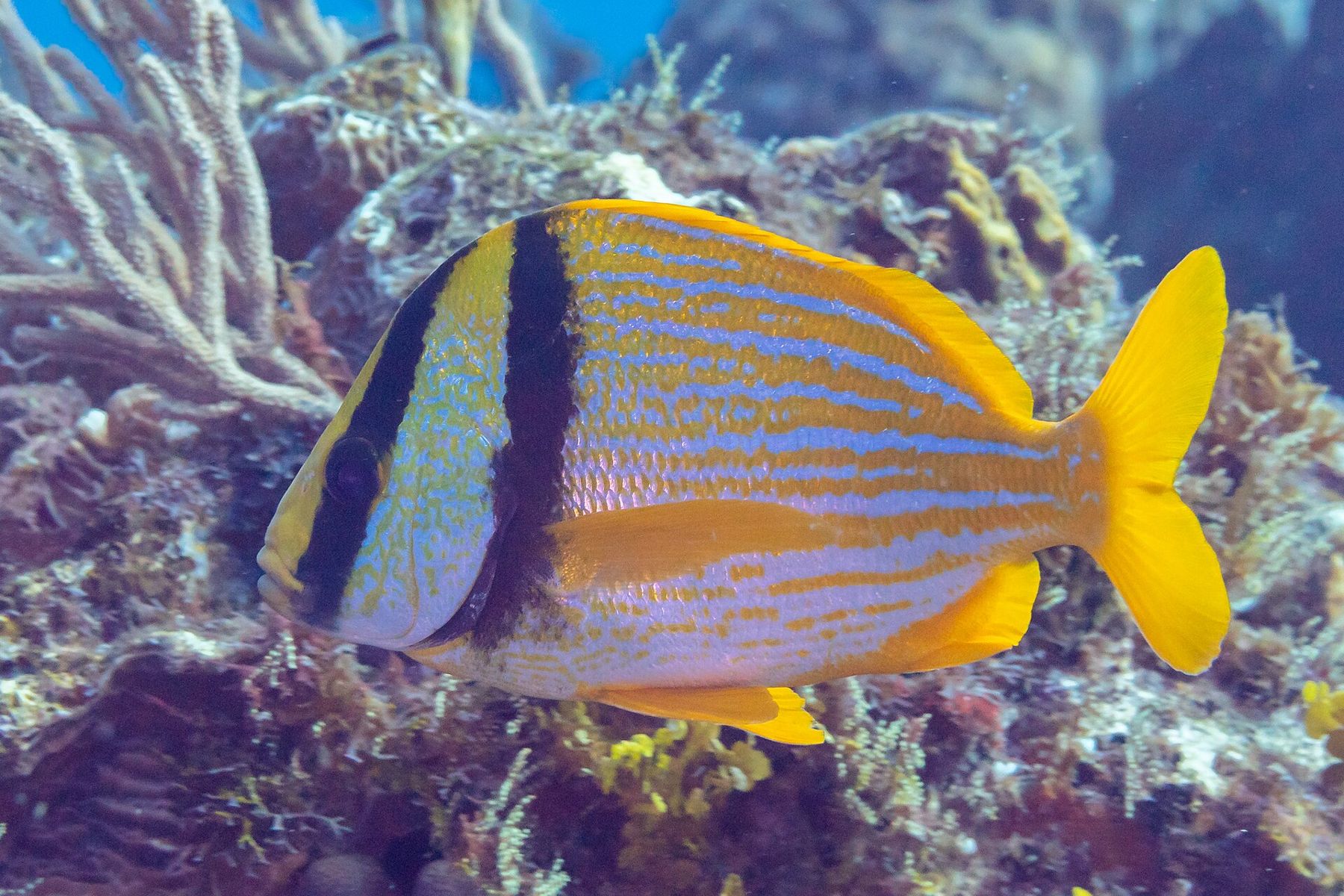
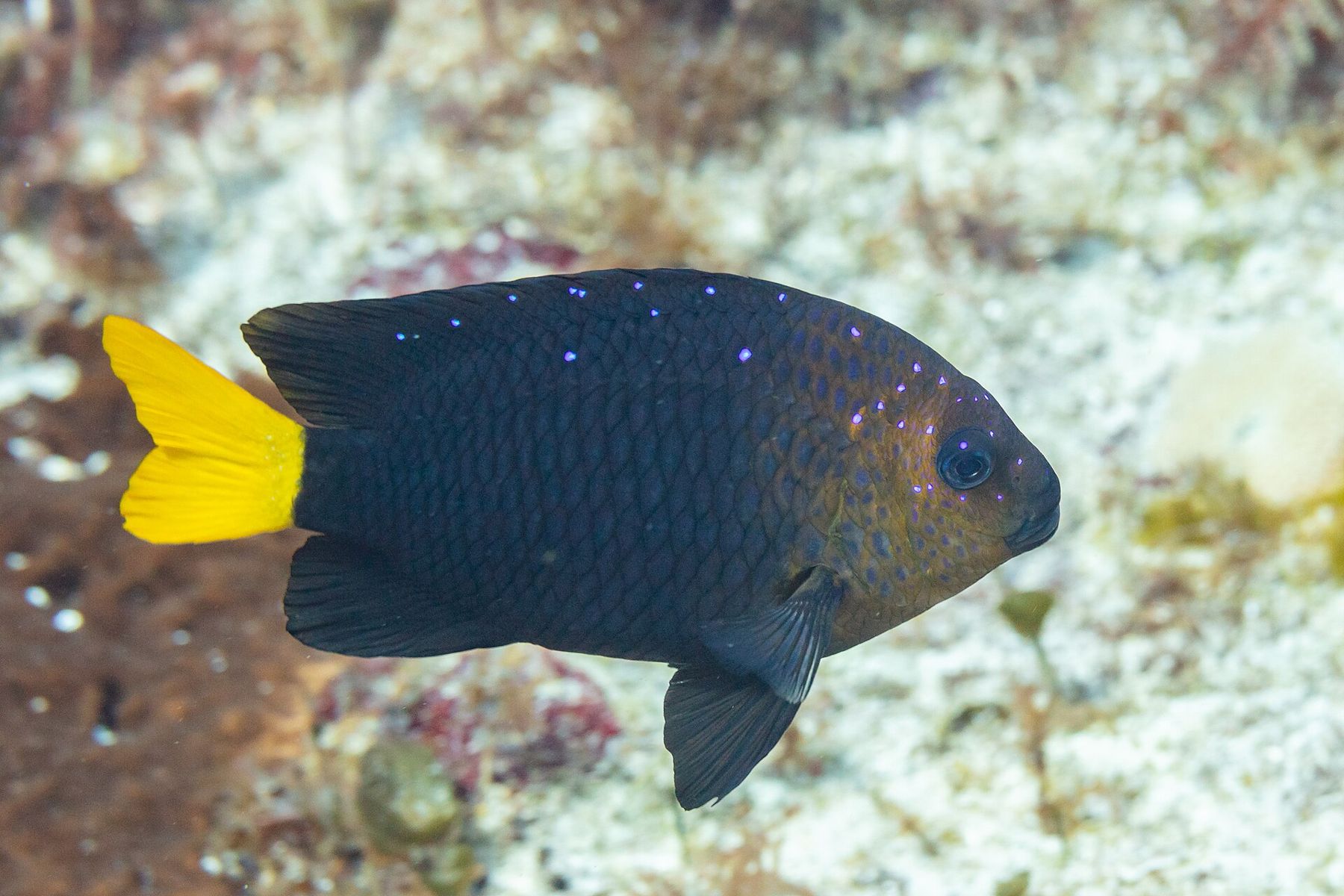
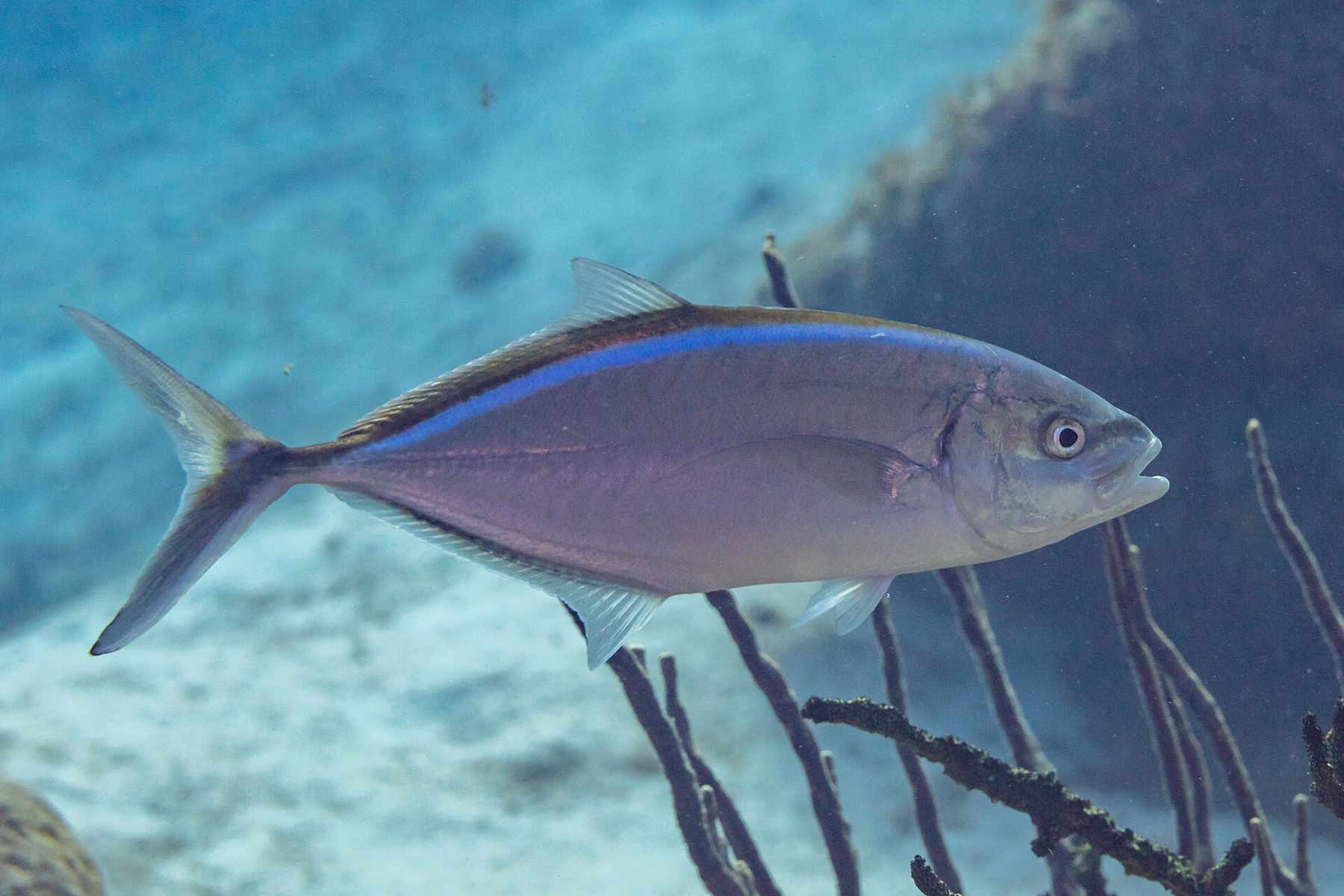
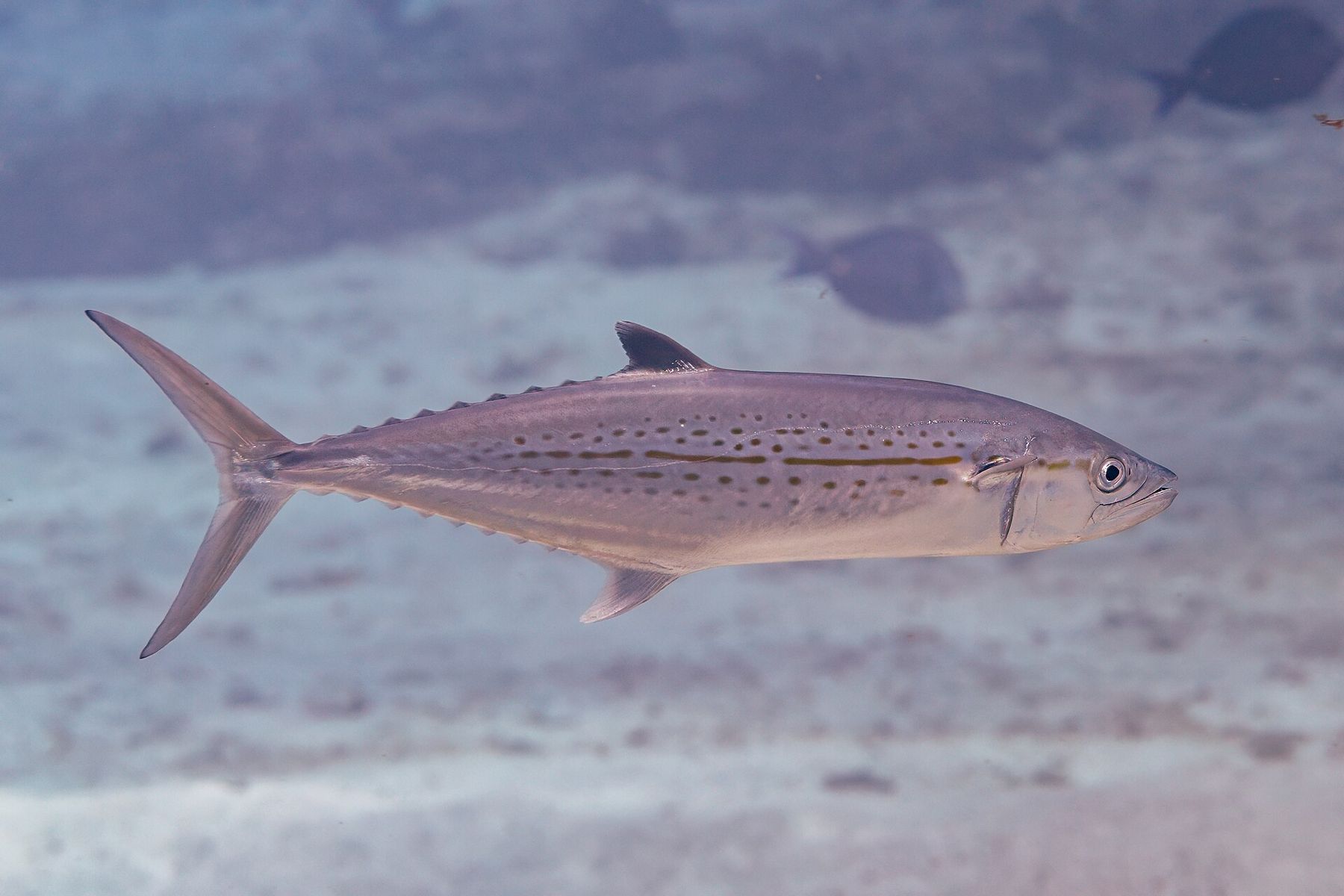
Sponges are a big part of the colour: barrel sponges, tall tube sponges and the purple and orange vase sponges that grow from the sides of the buttresses. Look under ledges for lobster and the long whiskers of crabs, and keep an eye on the blue side for turtles and eagle rays passing along the edge.
The drift
Almost every Palancar dive is a drift. The current along Cozumel's west side most often runs north, parallel to the reef, though its direction and strength change and can surprise even the crews who read it daily. The boat drops the group up-current, everyone descends together, and the reef slides past while you hold a steady depth. At the end of the dive the group ascends together and the boat follows the bubbles to pick you up.
The technique is simple to describe and takes practice to do well. You do not swim against the water. You stay neutrally buoyant, a little above the coral, and use small fin movements to steer around a buttress or tuck in behind one when you want to stop and look. The longer explanation is in the logbook entry on how drift diving works, and it is worth reading before your first Cozumel boat if drift diving is new to you.
Gloves are not allowed in the marine park, and that rule matters here. If you need to steady yourself, the answer is better buoyancy and more space from the reef, not a hand on the coral. A reef hook is not part of normal recreational diving here; your guide will tell you if a site calls for anything unusual.
Depth discipline
The danger at Palancar is not a monster or a cave. It is the view. The edge of the shelf falls away into water so clear that 30 metres looks the same as 18, and a diver following a turtle or a camera shot can sink well past the plan without feeling any change.
Three habits keep the dive calm. Check your computer often, especially when you are near the edge or watching something in the blue. Agree the maximum depth at the briefing and treat it as a ceiling on the way down, not a target. And keep the guide and your buddy in sight, because in a current a few seconds of distraction can put real distance between you.
Dive within your training and your computer's limits. If the planned profile is deeper than you are comfortable with, say so on the boat; guides are used to placing less experienced divers at a shallower level above the group.
The edge of the shelf falls away into water so clear that 30 metres looks the same as 18, and a diver following a turtle or a camera shot can sink well past the plan without feeling any change.
Conditions and the park
The figures in the header are typical, never promised. Water is warmest in late summer and coolest in winter, visibility is often excellent but drops after storms, and current varies from a gentle push to a fast ride. In strong north winds, the nortes of the cooler months, the port can close to small boats altogether and no one dives the south reefs that day.
Palancar lies inside the Arrecifes de Cozumel National Park, which charges a fee and sets rules for every visitor. In recent years the fee has been paid as a wristband or a charge collected by the operator. The core rules are stable: no touching, no gloves, no feeding and no taking anything from the reef. Amounts and the way the fee is collected change, so check before you go; the marine park and its rules entry covers this in more detail.
Like reefs across the Caribbean, Palancar has been hit in recent years by stony coral tissue loss disease and by warm-water bleaching. Some of the large brain and star corals show bare white patches or algae where living tissue used to be. Sponges, soft corals and fish life are still plentiful, and the structure of the buttresses is unchanged. It is fair to say the reef has changed and is still worth diving, and fair to say that your own buoyancy is one of the few things you control that helps it.
Planning the day
A typical morning on the south reefs is a two-tank trip: a deeper first dive, then a surface interval on the boat or near the shore, then a shallower second dive. Palancar often fills one of those slots, sometimes with Gardens as the easy second dive after a deeper site such as Colombia reef further south.
Before the boat leaves, make sure you understand the signals for staying together and for the end of the dive, carry a surface marker buoy and know how to deploy it, and set your computer to the gas you are breathing. Bring a small light even in daylight; it brings out the colour under the ledges.
| Section | Typical feel | Who it suits |
|---|---|---|
| Gardens | Lower coral heads, sand | Newer divers, second dives |
| Horseshoe | Buttresses round a bowl | Divers comfortable at depth |
| Caves | Tunnels and overhangs | Good buoyancy control |
| Bricks | Buttresses and sand | Comfortable drift divers |
Which section you see depends on the current, the group and the guide. If you want to compare it with the steeper, darker profile further north, the Santa Rosa Wall entry describes the other classic drift on this coast.
Log notes
When you write the dive up afterwards, note the section, maximum depth, time, the direction and strength of the drift, and what you saw in the blue. Over several days the notes show how different the same reef can feel from one morning to the next, and they make a useful record if you come back in another season.
Conditions change daily. Treat every number on this page as a typical range, follow the briefing, and let the captain and the dive guide make the calls about where and whether to dive.
Who shot these frames
- Diego Delso, CC BY-SA 4.0
- Diego Delso, CC BY-SA 4.0
- Diego Delso, CC BY-SA 4.0
- Diego Delso, CC BY-SA 4.0