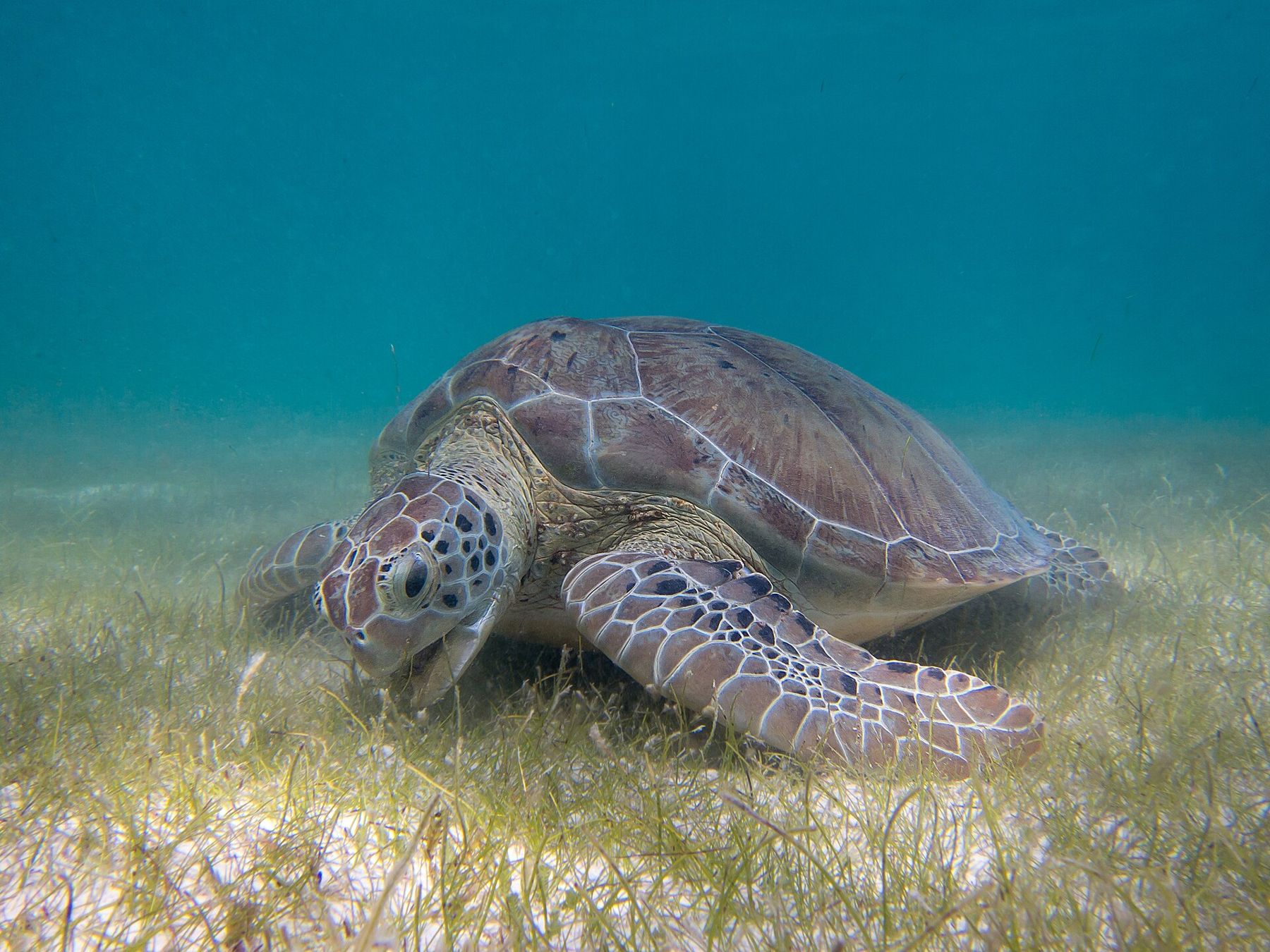
Green turtles are grazers. Unlike most sea turtles, adult greens eat mainly seagrass and algae, and they return to the same meadows day after day. At Akumal the meadow is a shallow, sheltered bay on the mainland coast, a short swim from the sand, and the turtles that feed there are the reason thousands of people come to swim with them.
The name Akumal is usually explained as "place of the turtles" in Maya. The bay has a reef across its mouth that breaks the swell, a floor of sand and seagrass, and water from the surface to a few metres deep. It is one of the easiest places on the Riviera Maya to see a large wild animal from a snorkel.
The bay and the turtles
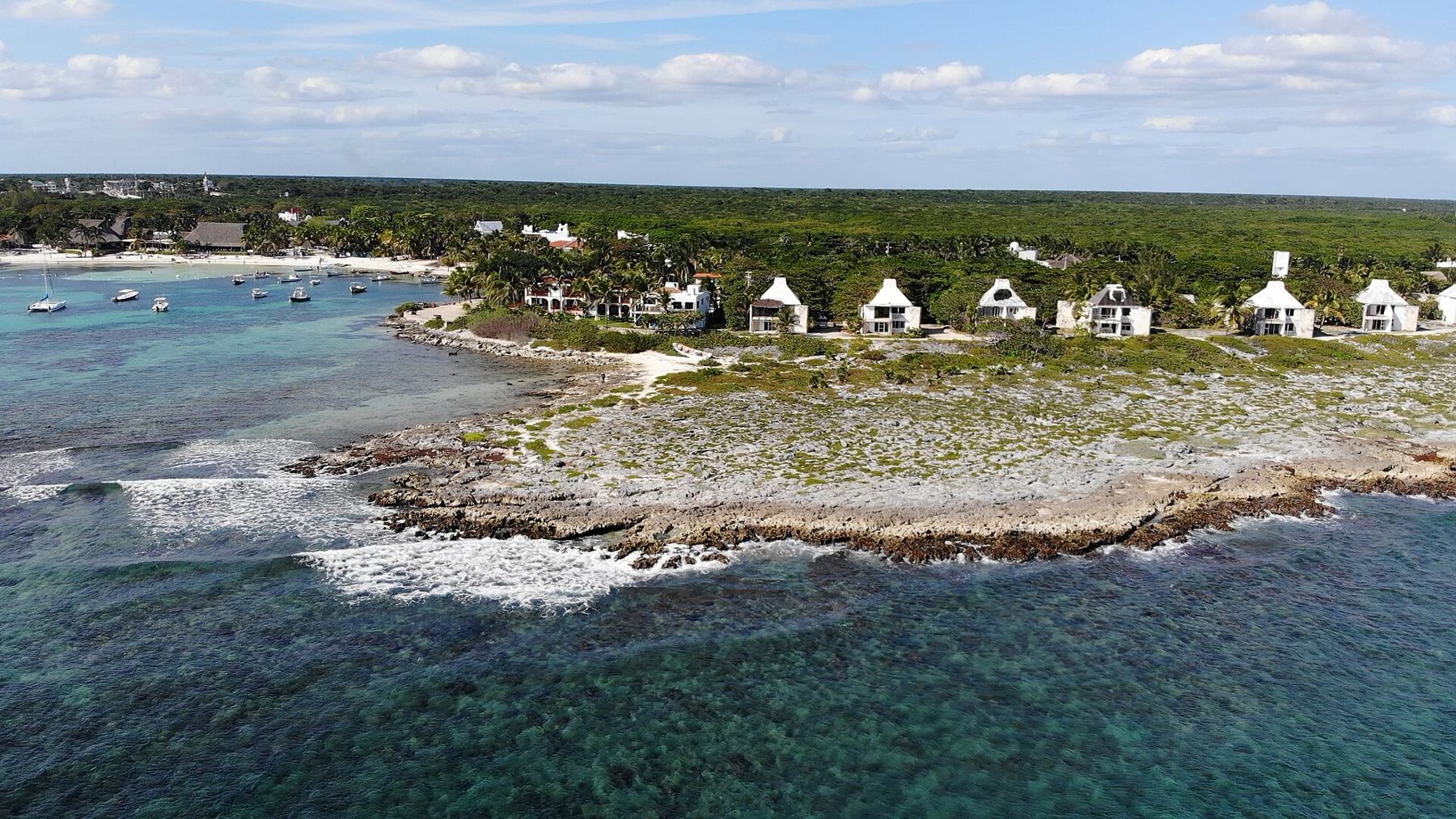
Akumal sits on the coast highway between Playa del Carmen and Tulum. The main bay is a curve of beach facing east, with the reef line offshore marked by breaking waves. Inside the reef, the water is calmer and the bottom is a patchwork of sand and seagrass.
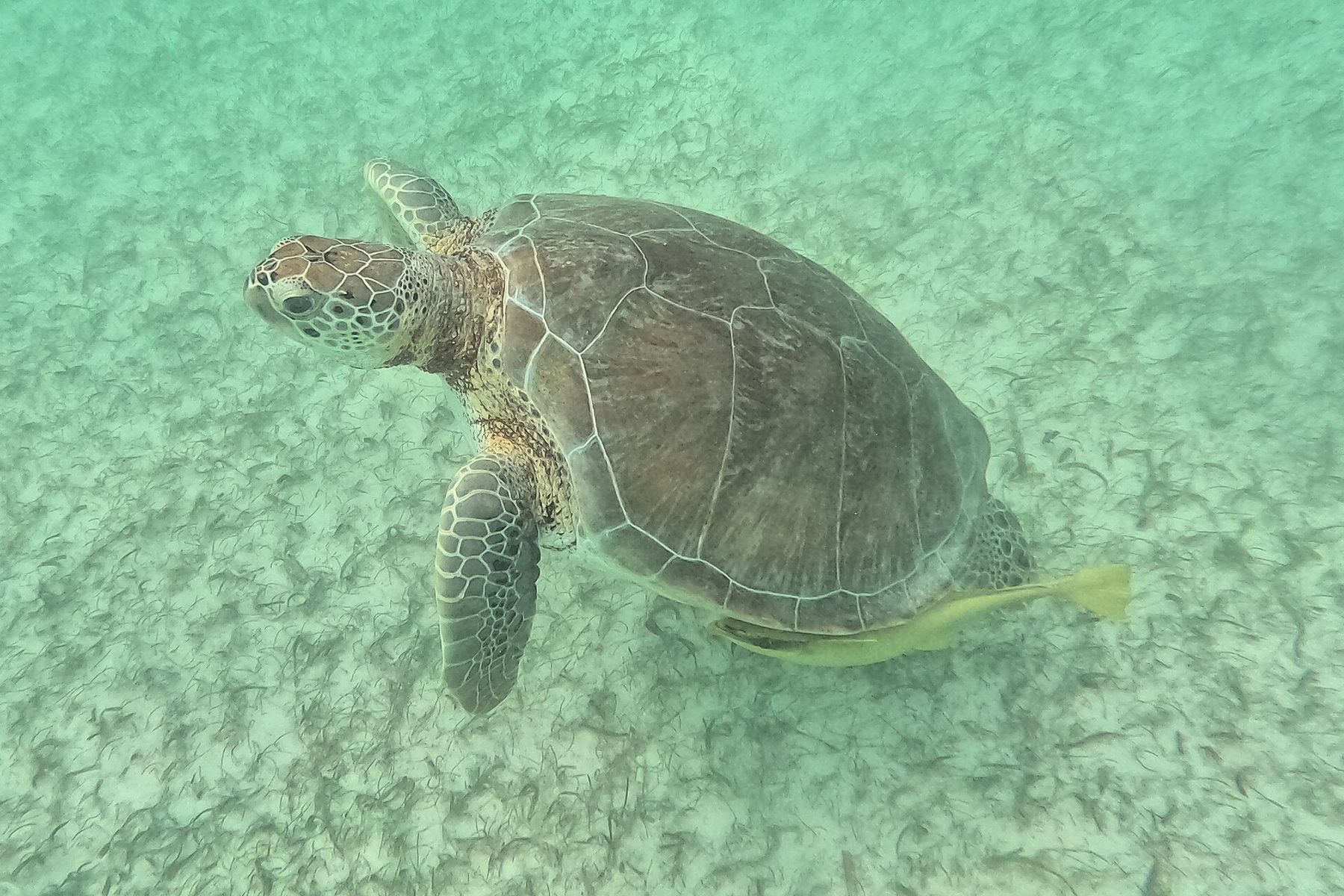
The turtles feed on the seagrass, cropping it close, and rise to the surface every few minutes to breathe. They are wild animals and come and go; on most days some are in the bay, but no sighting is guaranteed. Remoras often ride on their shells, and rays, small reef fish and sometimes barracuda share the bay.
Hawksbill turtles are also seen around the reef from time to time. Loggerheads and greens nest on beaches along this coast in the summer months.
Roped zones, vests and guides
As the bay became popular, the pressure on the turtles and the seagrass grew. In recent years the authorities have responded with rules that change the way a visit works. The details have changed more than once, so take this as the general picture and check before you go.
- Roped areas. Parts of the bay are marked off with buoys and lines. Some zones are closed to swimmers to give the turtles room to feed; others are open for snorkelling.
- Life vests. Snorkellers have been required to wear a life vest in the bay. A vest keeps you floating at the surface and stops you standing on the seagrass or diving down onto a turtle.
- Guides. Snorkelling with the turtles has in recent years been allowed only in small groups with a certified guide, at least in parts of the bay. Access arrangements on the beach have also changed over time.
- Fees. Entry to the beach area and guided snorkels have carried charges. Amounts and who collects them change.
Rules like these can feel restrictive on a hot morning, but the reason is visible in the water. Seagrass trampled by fins does not grow back fast, and turtles chased by swimmers spend less time feeding.
Distance and behaviour
The best turtle encounter is one where the turtle never seems to notice you. Stay at the surface, float quietly and let the turtle carry on feeding. When it rises to breathe, keep clear of its path to the surface and do not block it.
Keep a distance of several metres, as your guide directs. Never touch, chase, ride or feed a turtle, and do not use a flash. Keep your fins high and away from the seagrass; if the rules in force ban fins in your zone, follow them. Wear a rash guard and use mineral sunscreen sparingly, or none, since lotion washes off into a small, enclosed bay. The entry on reef manners and sun protection covers this in more detail.
The best turtle encounter is one where the turtle never seems to notice you.
Getting there and timing
Akumal is reached from Highway 307, the main road along the coast. From Playa del Carmen it is a drive of under an hour; colectivo vans run along the highway and stop at the turn-off, from where it is a short walk to the beach. Parking and the beach access area have their own arrangements, which change.
Mornings are usually calmer, with fewer people in the water and often better visibility. Later in the day the bay fills up, especially when tour groups arrive. Wind from the east can stir up the water inside the reef and reduce visibility.
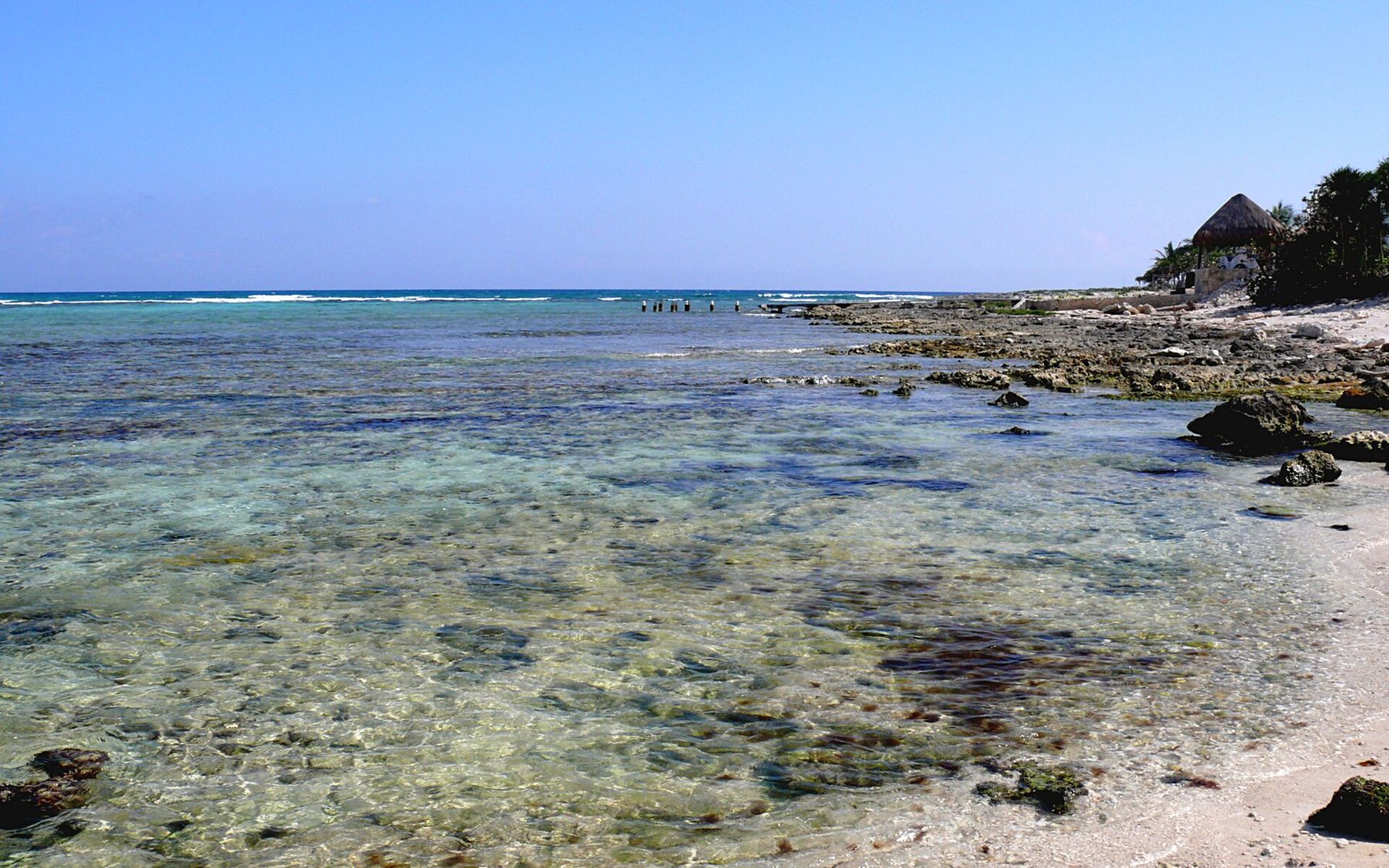
Sargassum has arrived in heavy amounts in some years, piling on the beach and clouding the shallows. How much there is changes from season to season. The entry on water temperature, visibility and sargassum by month has the general seasonal picture.
A calm first snorkel
For many visitors, Akumal is the first time they put on a mask. The bay suits that well, as long as you prepare a little. Practise breathing through the snorkel in knee-deep water before swimming out, and fit the mask so it seals without being tight. Clear water from the snorkel with a short, firm breath out rather than lifting your head.
With a vest on, you float without effort, so the work is only in moving gently and keeping your face in the water. Swim slowly, with long, easy kicks from the hip, and stop to rest whenever you like by simply floating. Children should be with an adult who stays within arm's reach, and anyone unsure in the water should tell the guide at the start.
Bring a dry layer and drinking water for afterwards. Even in warm water, an hour of floating can leave you cooler than you expect, and the sun on your back is stronger than it feels.
The reef beyond the bay
The reef across the mouth of the bay is part of the long chain of reefs that runs down this coast. It takes the force of the swell, which is why the bay is calm. Do not swim out to it from the beach: boat traffic uses the channel, the current near the reef can be strong, and the breaking waves on the reef crest are dangerous. Reef snorkelling and diving here are done by boat with a licensed operator.
The wider picture of this reef system, including the coral types and the effects of disease and bleaching in recent years, is in the entry on the Mesoamerican Reef, in brief.
A note on conditions
The header figures are typical, never a promise. Visibility in the bay is often only fair, because sand and seagrass particles stay in the water when it is churned. The current inside the bay is usually mild, but can pick up near the reef and the channel.
Rules, fees and access change, so check before you go, and follow the instructions of the guides and staff on the beach. Conditions change daily; if the water looks rough or the flags say no, the turtles will still be there another morning.
Who shot these frames
- P.Lindgren, CC BY-SA 3.0
- Eden, Janine and Jim from New York City, CC BY 2.0
- Branko for Woods Hole Coastal and Marine Science Center, United States, Public domain
- Ken Thomas, Public domain

