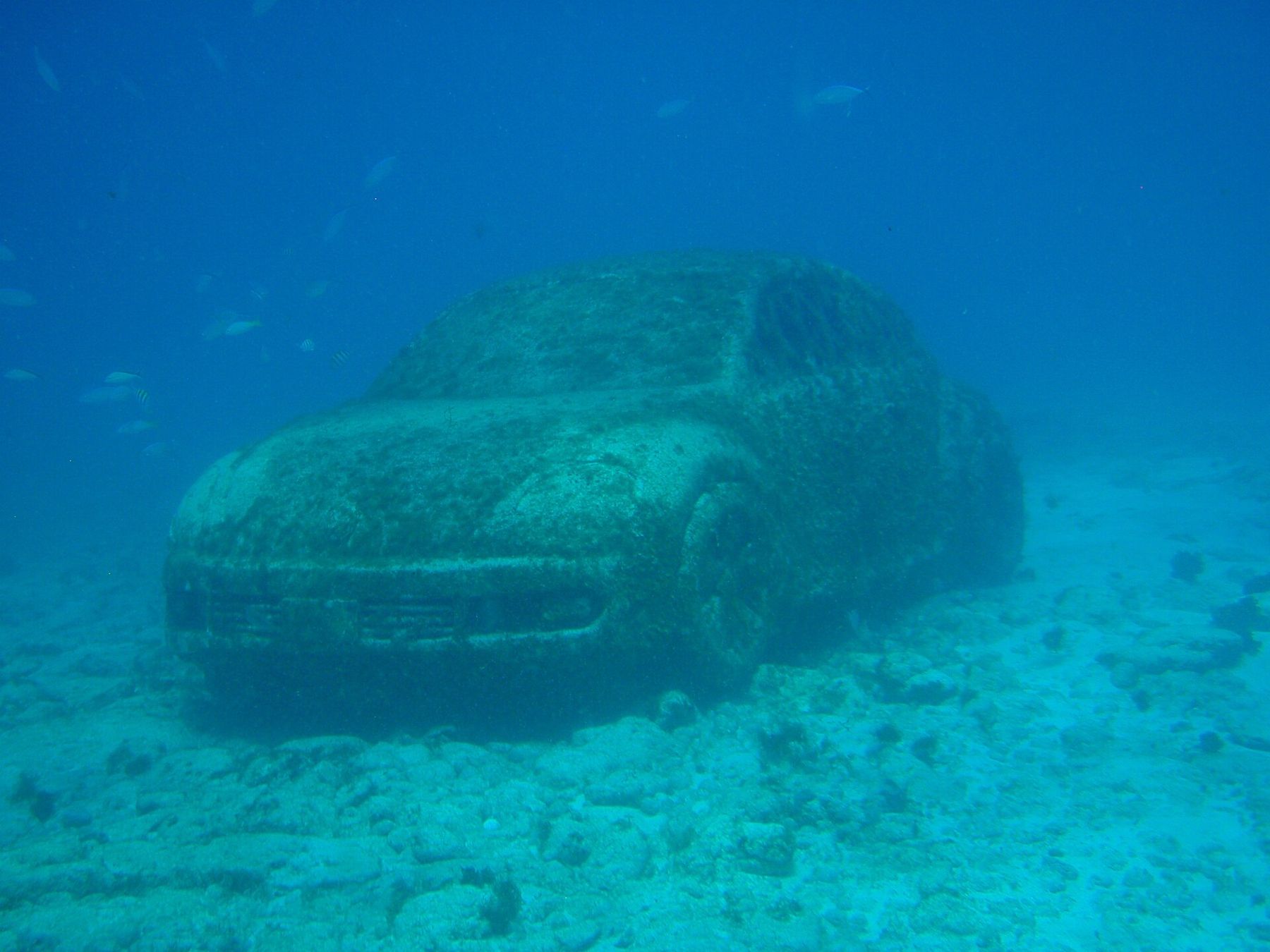
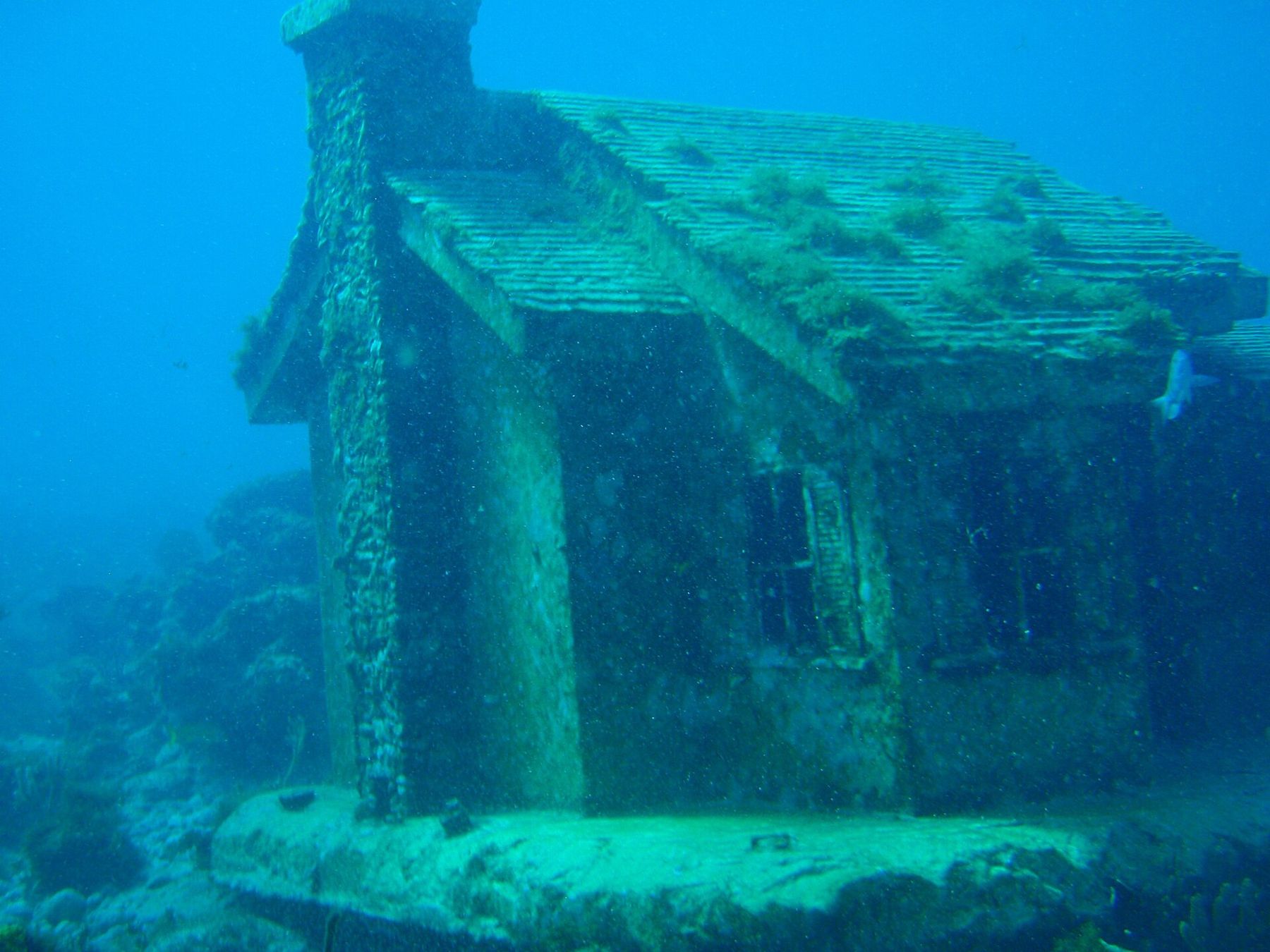
A car rests on the sand, its roof furred with algae, a school of grunts drifting past the bonnet. A few metres away, a small house stands with weed growing on its roof. Neither belongs there, and both were put there on purpose. The underwater museum off Cancún is a collection of several hundred sculptures placed on the seabed in the waters between Cancún, Isla Mujeres and Punta Nizuc, and it has been growing a reef of its own since the first pieces went down around 2009 and 2010.
This entry covers what the museum is for, the main ways to see it, and the conditions that decide whether a trip goes ahead. As always, conditions are typical rather than promised, and the captain and guide make the call on the day.
Why put statues in the sea
The idea is practical as much as artistic. The natural reefs around Cancún and Isla Mujeres receive a great many visitors, and heavy traffic wears a reef down: fins break branches, hands spread disease, sediment smothers coral. The sculptures offer a second destination, close to the busy natural sites, where snorkellers and divers can spend time without leaning on living coral.
The figures and objects are cast in a marine-grade cement chosen to give coral larvae, sponges and algae a surface to settle on. Over the years they have changed colour and texture. Faces soften, surfaces roughen, and fish move in. Some sculptures were designed with hollows and ledges for lobsters and small fish. It is a slow experiment in turning an artwork into habitat.
Snorkel, dive or glass-bottom boat
There are three common ways to see the museum, and the right one depends on your comfort in the water.
- Snorkel. Some groups of sculptures sit in shallow water, a few metres down, so you can see them clearly from the surface on a calm day. Life vests are commonly required for snorkellers in the park area. This is the easiest option and the one most visitors choose.
- Dive. Other groups sit deeper, typically around eight to ten metres, which is suited to divers. At that depth you can swim slowly around the figures and see the sponges and corals growing on them up close. New divers can usually manage this depth with a guide; dive within your training and your computer's limits.
- Glass-bottom boat. For non-swimmers, or on a day when the water is choppy, some boats offer a view through a glass panel. You see less detail, but you stay dry and still see the shapes on the sand.
All three are run by licensed operators. The sculptures lie inside a protected marine area, so visits follow park rules and a fee is usually charged. Amounts and arrangements change, so check before you go.
What you see on the sand
The best-known installation is a large group of standing human figures, cast from real people, arranged in rows on the sand. Smaller pieces are scattered nearby: the car, the house, and other everyday objects made strange by being underwater. The effect is quiet and slightly eerie, especially when the light is low or the water is milky.
Fish life around the sculptures is ordinary reef fish rather than anything rare: sergeant majors, grunts, snappers, wrasses and the occasional ray crossing the sand. That ordinariness is the point. Fish treat the sculptures as structure, the same way they treat a coral head, and over time the line between artwork and reef blurs. If you want to understand what a natural reef here looks like, the entry on the wider reef system gives the background.
Conditions and the weather window
The sculptures lie in open water between the mainland and Isla Mujeres, so wind and swell matter more than they do inside a sheltered lagoon. A fresh easterly or a winter norther can kick up chop that makes the boat ride uncomfortable, stirs the sand and cuts visibility. On those days snorkel stops may be moved, shortened or cancelled, and the port authority can close the harbour to small boats altogether.
Calm mornings tend to give the clearest water. Late spring and early summer often bring settled weather, while autumn carries the risk of tropical storms and winter brings northers. The water-by-month entry sets out the general pattern. Even in a good month, the forecast for the day decides more than the calendar does.
Current is usually mild to moderate but can pick up. Snorkellers stay with the guide's float, and divers follow the guide's pace. The boat ride is short but can be bumpy, so anyone prone to seasickness may want to take a remedy beforehand.
Looking after the sculptures
The sculptures are art, but they are also becoming reef, and the same manners apply as anywhere else. Do not touch the figures, stand on them or sit on them, however tempting the photograph. Do not kick up sand near them; fins should stay well above the bottom. Do not feed the fish. Corals and sponges growing on the sculptures are just as fragile as those on a natural reef.
Wear a rash guard rather than coating yourself in lotion, and if you do use sunscreen, a mineral one is the better choice. The entry on reef manners goes through the details.
Is it worth the trip
If you are expecting the colour and density of a healthy natural reef, the museum may feel sparse; it is sand, statues and the life that has gathered on them. If you go to see something unusual, an experiment in giving a busy reef a rest, it is a calm and memorable hour in the water. Pairing it with a natural reef stop on the same trip, which many boats do, gives you both halves of the picture: what the coast grew on its own, and what people have tried to add.