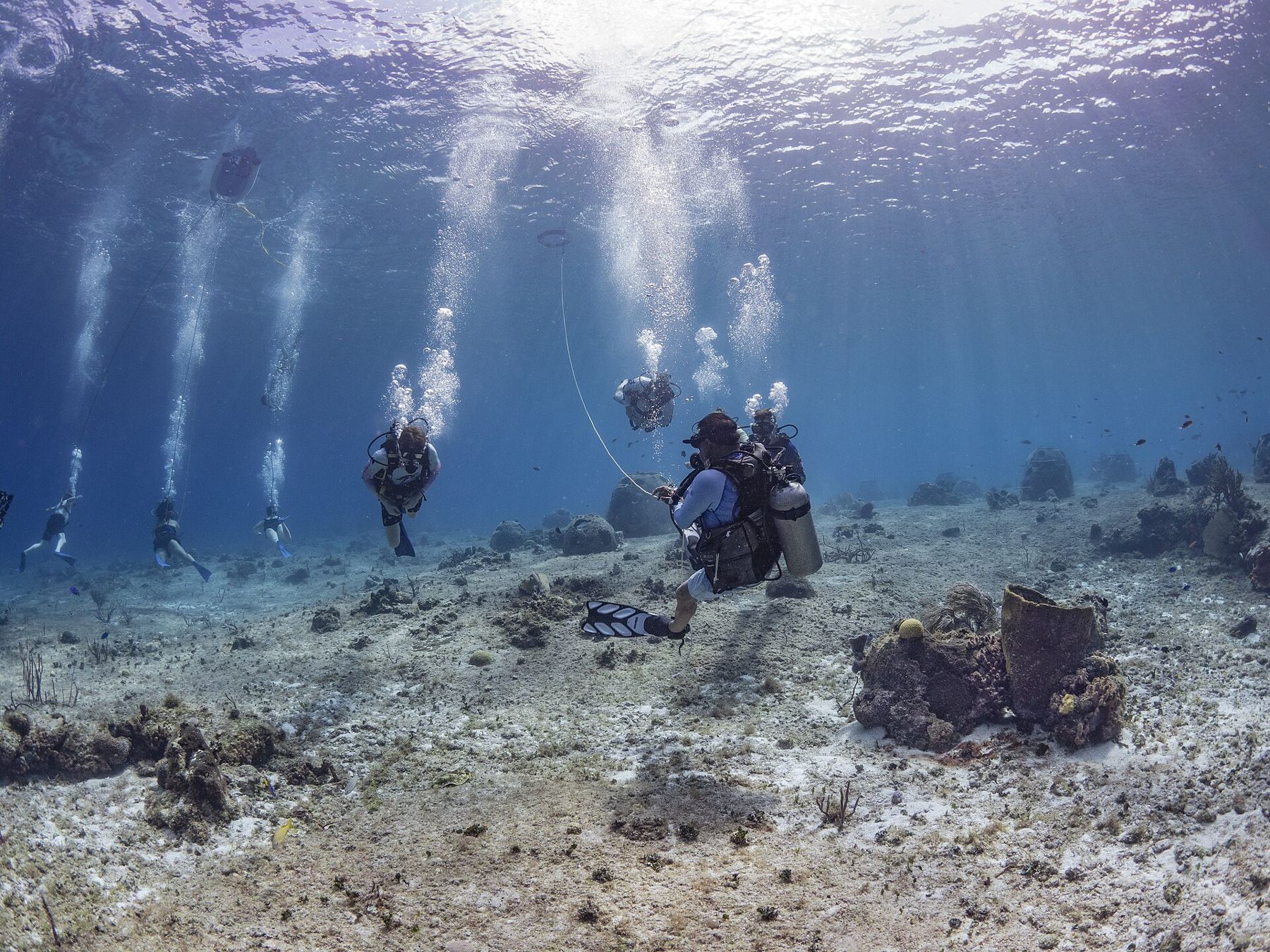
Ten minutes from the dock, give or take. That is the first thing to know about the reefs off San Miguel: they are close. The boat leaves the west coast, runs a short way along the shore past the town and the cruise piers, and the group is in the water before anyone has had time to feel seasick.
These reefs are lower and calmer than the famous southern walls. Patches of coral sit on white sand at modest depths, the current is often gentle, and the dives are easy to plan. That makes them the natural place for a refresher, a first drift, a check dive at the start of a trip, or a night dive.
What the reefs are like
Close to town the shelf is wide and shallow. Instead of tall buttresses or a wall, you find low patch reefs: mounds and ridges of coral and sponge separated by sand, often in lines that run parallel to the shore. Depths of roughly 5 to 18 metres are typical, though some sites have a drop-off on their outer edge.
The Villa Blanca area, south of the main town, has both a shallow reef and a deeper wall section, so it can suit different levels on the same morning. Other sites nearby are named after the stretches of shore they face. Your dive operator will choose among them depending on the current, the group and the traffic at the piers.
Life here is the everyday cast of a Caribbean reef: parrotfish, angelfish, grunts, snappers, trumpetfish, moray eels in their holes, lobsters under ledges, and turtles on many dives. Because the dives are shallow and unhurried, they are also a good place to slow down and look at small things: flamingo tongue snails on sea fans, cleaning stations where small shrimp and gobies pick at larger fish, and juvenile fish hiding in the coral.
A first Cozumel drift
Even close to town, most dives are drifts. The current usually runs north along the west side, and the boat drops the group up-current and follows the bubbles. On these reefs the flow is often mild, so it is a good place to learn the rhythm: descend together, settle your buoyancy, let the water carry you, and steer with small movements.
New divers usually find the shallower depth reassuring. There is a sandy floor below you, the surface is not far above, and there is time to practise holding a depth without the pressure of a wall.
A few things still matter. Carry a surface marker buoy and know how to deploy it. Stay with the guide; even a mild current separates divers who stop to look at different things. And dive within your training and your computer's limits. If you are not yet comfortable with drift diving, say so at the briefing.
Toadfish in the crevices
The resident everyone hopes for is the splendid toadfish, a flat-headed fish with blue-grey stripes and bright yellow fin edges. It lives around Cozumel and is rarely seen anywhere else, which makes it a small celebrity among divers.
Toadfish hide deep in crevices under coral ledges, usually with only the head showing. You often hear them before you see them: a low grunt or croak that carries well underwater. Look into dark gaps under ledges, especially low on the reef, and use a light if you carry one. Do not poke or shine the light directly into its eyes for long. More on the toadfish and the other regulars is in the entry on the splendid toadfish and other locals.
Night dives
The short ride and gentle conditions make the town reefs the usual choice for night dives. The reef changes after dark. Octopuses come out to hunt, lobsters and crabs leave their holes, basket stars unfurl, and some parrotfish sleep wrapped in a mucus cocoon. Small creatures that hide by day show up in the beam of a torch.
A night dive follows the same rules as a day dive, with a few additions: a primary light and a backup, a marker light on your tank if the operator asks, and a clear agreement on light signals. Stay close to the guide and your buddy, and keep your light off other divers' faces.
Night dive schedules, group sizes and requirements vary between operators, and some ask for a minimum number of previous dives. Check before you go.
Shore, piers and traffic
The same stretch of coast is busy above water. Cruise ships use the piers south of town, ferries cross from the mainland, and small boats come and go all day. This is one reason shore diving here is limited to certain points and why most dives are done from boats with a captain watching the surface. The entry on Chankanaab and the shore entries covers the places where you can get in from land.
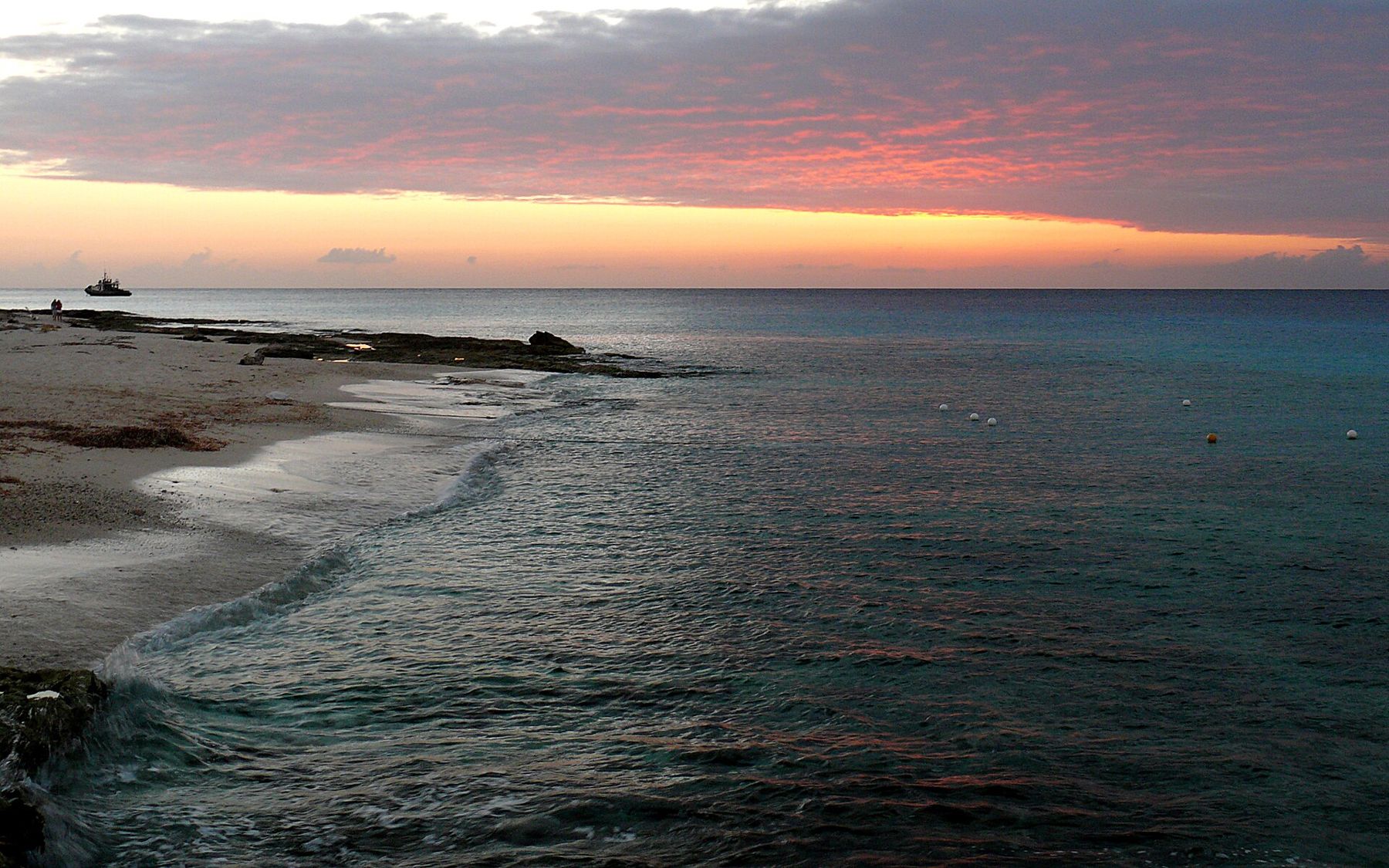
If you are crossing from Playa del Carmen for a day of diving, allow for the ferry schedule and the walk or taxi to the dock. The entry on crossing to Cozumel by ferry has the general picture.
Conditions and rules
The town reefs are inside the Arrecifes de Cozumel National Park: no touching, no gloves, no feeding, nothing taken, and a park fee whose amount and collection change, so check before you go. The figures in the header are typical, never a promise. In strong north winds the port can close even for these short trips. Conditions change daily, and the captain and dive guide decide where and whether to dive.
When you are ready for deeper water, the Santa Rosa Wall entry describes the next step along the coast.
Who shot these frames
- Sand Dollar Sports, CC BY 4.0
- Ken Thomas, Public domain
