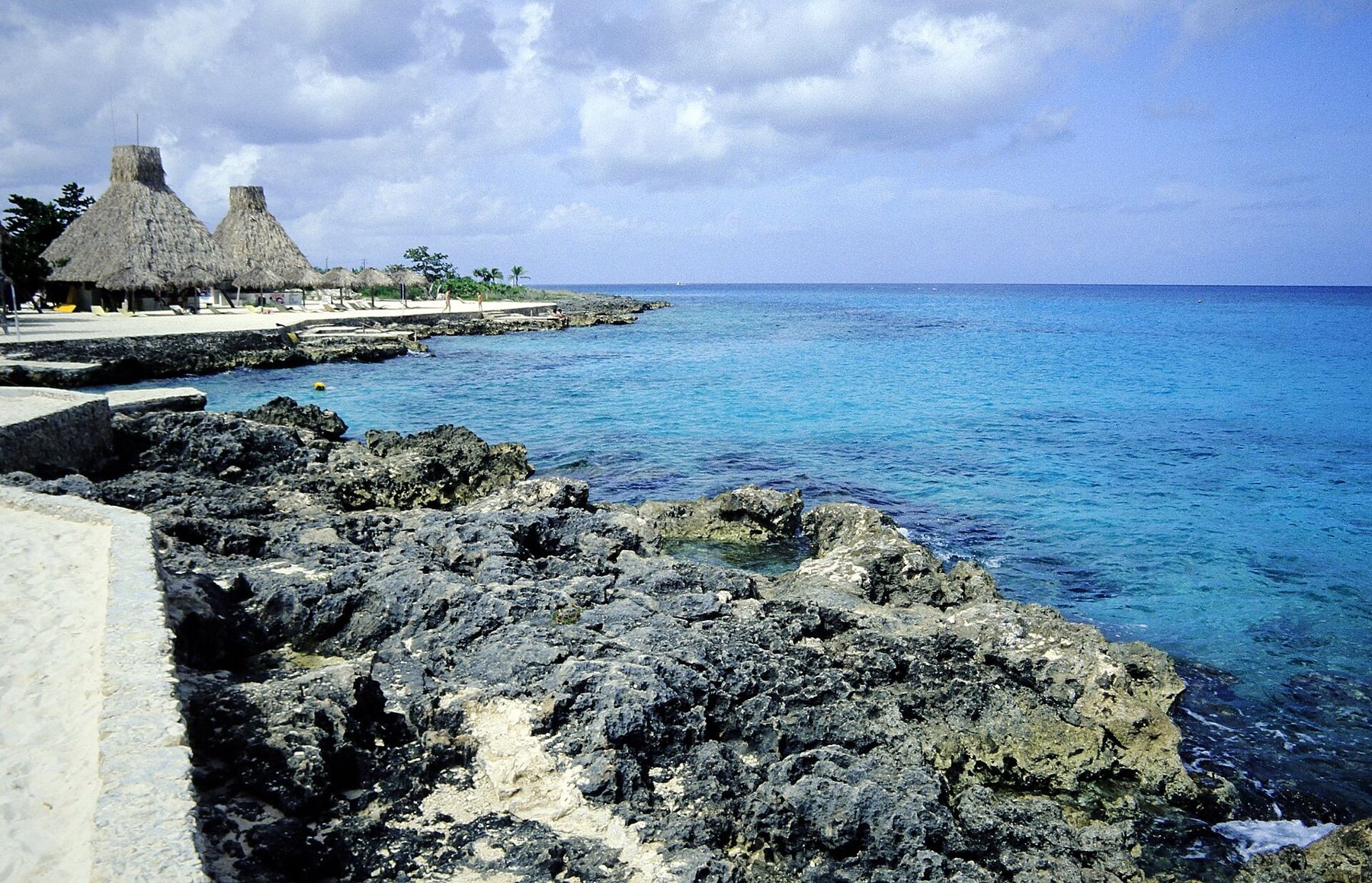
Stone steps lead from the shore straight into the sea, and a metre below the surface the reef begins. That is the appeal of Chankanaab: no boat, no schedule set by a captain, just a ladder or a set of steps, a mask, and the clear water of Cozumel's west coast.
Chankanaab is a park a few kilometres south of San Miguel, on the coastal road. Taxis run there from town, and many visitors come by rented scooter, car or bicycle; it is close enough that the ride is short, though the road has little shade. It combines a shore snorkelling area with an inland lagoon and planted gardens, and it is one of the best-known places on the island to get into the water from land.
The shore entry
Along the park's rocky waterfront, steps and ladders lead down into the water at several points. Close in, the bottom is rock and coral at snorkelling depth; further out it slopes to deeper reef that divers use for shore dives. Fish are used to people here, and parrotfish, sergeant majors, snappers and blue tangs gather around the entry points.
The water off the west coast is usually calm when the wind is from the east, which is much of the year. But the current that runs along the coast can reach the shore entries, and swell can push into the rocks on some days. Snorkellers should wear a vest, stay near the entry points and watch for any flags or instructions from park staff. Getting out is easier at the steps than on the rocks; plan your route back before you drift away.
Shore divers enter from the same waterfront and follow the slope out to deeper reef. Diving here is usually arranged with a guide or within the park's rules for divers, which can include registering or paying an extra fee. Check before you go.
The inland lagoon
Behind the shore lies the lagoon that gave the park its name. It is a natural pool of seawater set back from the coast, linked to the sea through passages in the limestone beneath the ground. The lagoon has its own fish and plant life and is protected; swimming in it is not allowed, and it is viewed from the paths around it.
The lagoon is an example of how porous the limestone of the Yucatán coast is. Water moves underground through the rock, which is also why the mainland is full of cenotes. Those are covered in a separate guide.
Gardens and the park on land
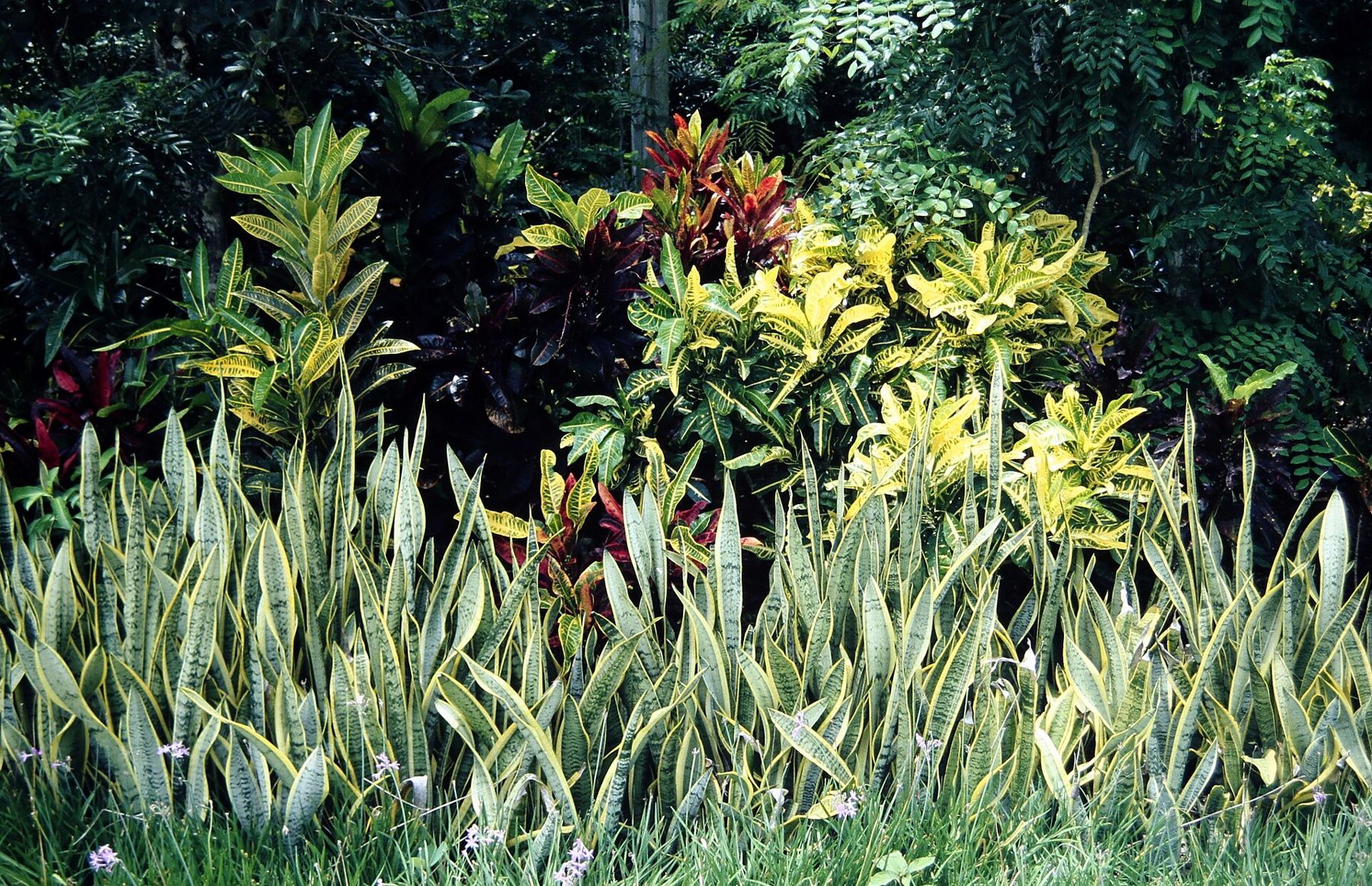
Paths through the park run past planted gardens of tropical plants, shade trees and native species. On the shore there are areas with loungers and shade between swims.
The park has an entry fee, and some activities inside carry extra charges. Hours, fees and what is open change, so check before you go. Mornings tend to be quieter, especially on days when several cruise ships are in port.
Other public shore entries
Chankanaab is not the only way into the water from land. Along the west coast road, north and south of San Miguel, there are public beaches and access points, plus beach clubs that charge for entry or ask you to buy food or drink. Some sit beside shallow reef or rocky shore that is pleasant for snorkelling on calm days.
- Choose an entry with an easy way back out, such as steps, a ladder or a sandy beach.
- Watch for boat traffic, especially near the piers and the marinas. A brightly coloured buoy or vest helps boats see you.
- Check the current before you go in. Drop a bit of seaweed or watch the water near the shore; if it moves quickly, swim up-current first so the return is easy.
- Do not snorkel alone, and tell someone on shore your plan.
The reefs close to San Miguel are mostly dived from boats; see the entry on the gentle reefs off San Miguel for what lies offshore.
Rules and manners
The water off Chankanaab is part of the marine national park, so the usual rules apply: no touching, no standing on coral, no gloves, no feeding, nothing taken. A mineral sunscreen or a rash guard is kinder to the reef than heavy lotion, and fins should stay off the bottom in the shallows. The entry on reef manners and sun protection goes into more detail.
Shallow reefs near popular entries take more wear than offshore sites, and some corals here show the effects of disease and bleaching seen across the Caribbean in recent years. Fish life remains plentiful.
Conditions
Bring your own mask and snorkel if you have them, since a good fit makes a long session far more comfortable. Rental gear is often available at shore entries, but quality varies. Water shoes help on rock, and a dry bag keeps a phone and cash out of the spray.
The figures in the header are typical. On a calm morning the shore entry can be as clear as any boat site; on a windy day the water near the rocks can be rough and cloudy. Strong north winds in the cooler months reach this coast too.
The east side of the island is a different matter entirely. Its beaches face the open sea and are no place for a casual swim; the entry on Cozumel's wild east side explains why.
Conditions change daily. Follow any instructions from park staff, wear a vest, and if the water looks wrong, leave it for another day.
Who shot these frames
- Chrisi1964, CC BY-SA 4.0
- Chrisi1964, CC BY-SA 4.0