Current logged as strong: reading an entry explains what that word means here.
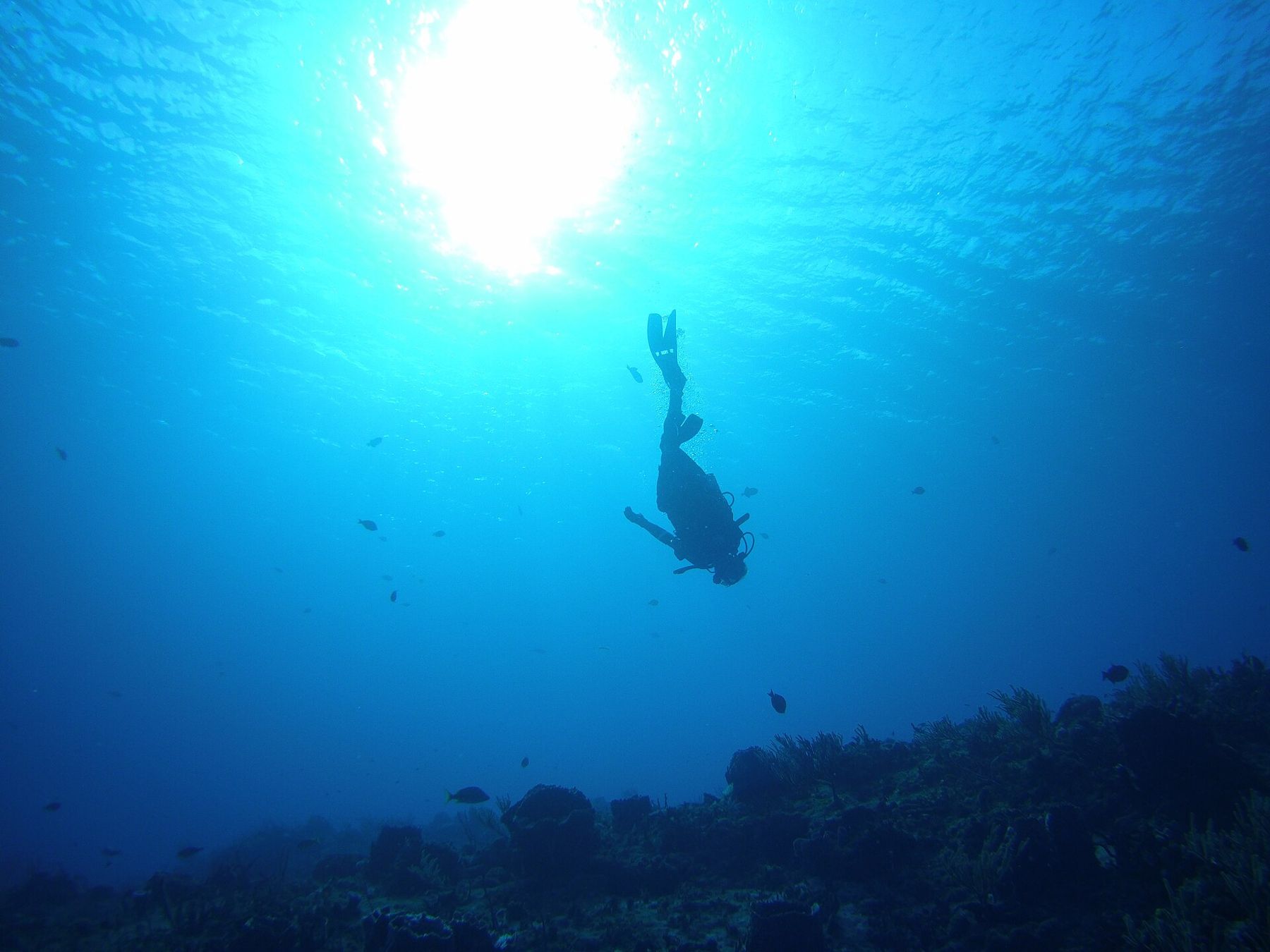
Buoyancy is the whole dive at Santa Rosa. The reef here is not a field of coral heads on sand but a wall: the edge of Cozumel's shelf, where the top of the reef ends and the face drops away into water far deeper than recreational limits. You float beside it, not above it, and the current carries you along the face. A diver who can hold a depth without thinking about it has one of the best drifts on the island. A diver still fighting their buoyancy has a stressful one.
Santa Rosa lies on the west side of the island, south of the reefs nearest San Miguel and north of the Palancar sections. It is one of the classic deep drifts of Cozumel and usually the first, deeper dive of a two-tank morning.
The wall itself
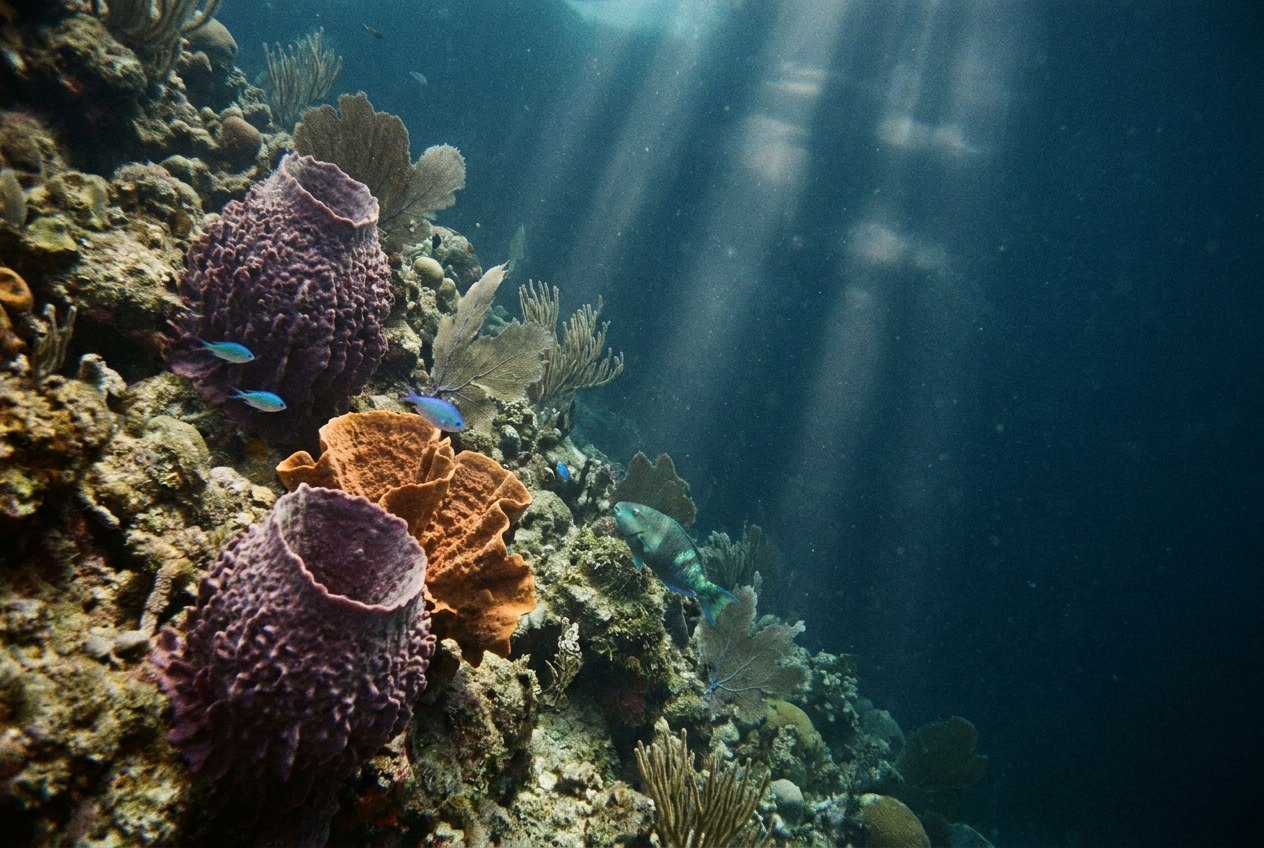
The top of the wall usually sits somewhere in the mid-teens of metres, with sand and coral on the shelf behind it. On the seaward side, the face falls steeply. In places it is vertical; in others it is undercut, with deep overhangs and shelves that hang out over the blue.
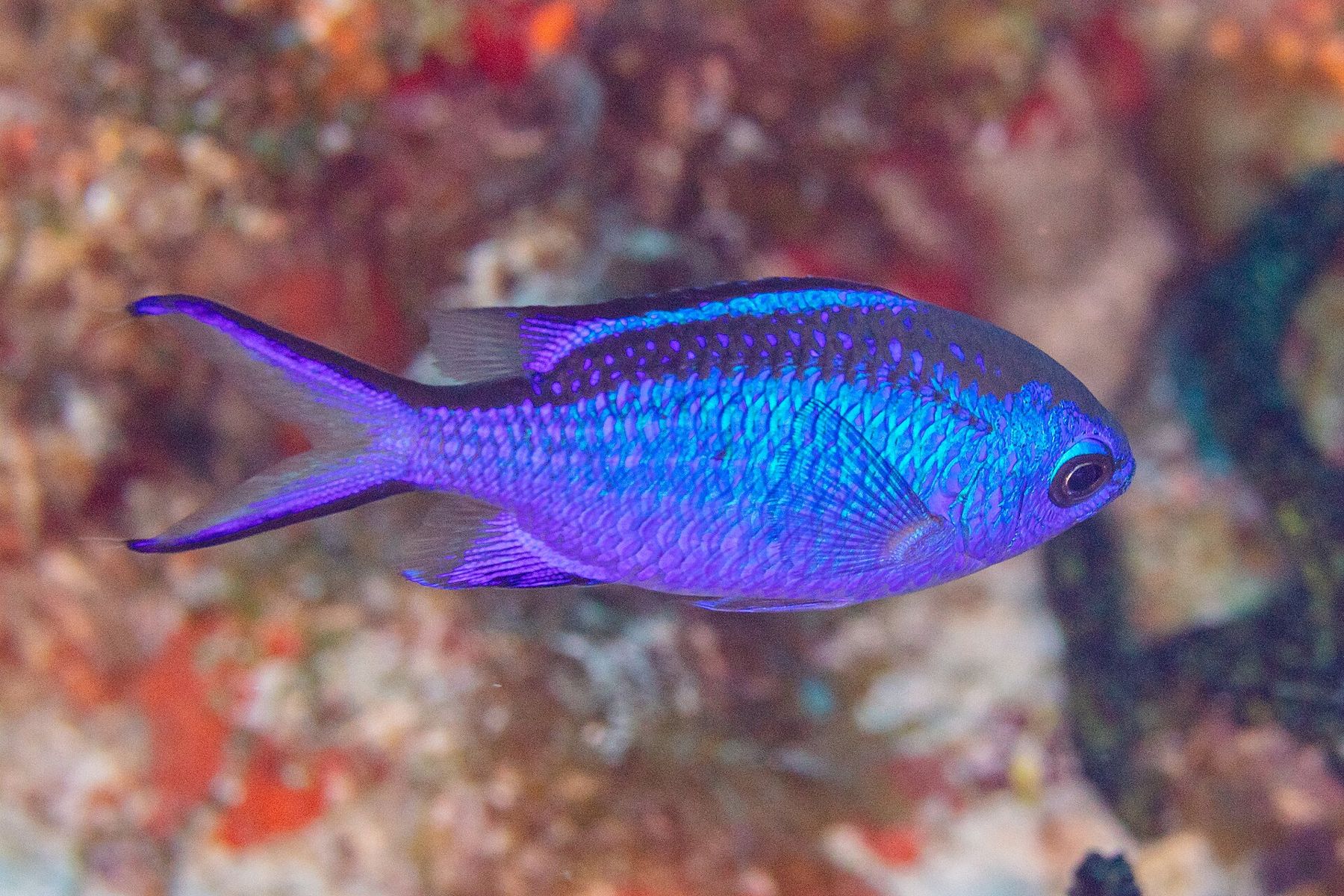
The overhangs are the signature of the site. Under them, sponges grow in quantity: large orange and yellow tube sponges, barrel sponges, and encrusting sponges in reds and purples that only show their colour under a light. Black coral grows in places on the deeper parts of the face. Groupers and snappers shelter under ledges, and lobsters and crabs show their antennae from the cracks.
The guide usually sets a depth along the wall and the group drifts at that level, with chances to tuck under an overhang and look up at the ledge above. Some sections have short swim-throughs where the wall is cut by channels; enter them only on the guide's signal and only if you are comfortable.
Current
The current along Cozumel's west side most often runs north, parallel to the wall, and at Santa Rosa it can be strong. On a fast day the reef moves past at a brisk walking pace or more, and stopping means tucking in behind a buttress or under a ledge. The current can also change speed and direction during the dive, and near the wall there can be up- or down-flows.
You do not fight it. You stay with the group, keep your position just off the face, and steer with small fin movements. The boat follows the group's bubbles and collects everyone at the end. If this way of diving is new, the entry on how drift diving works covers drops, pickups and the habits that keep a group together.
The wall rewards patience. A diver who stays still, close to the face, usually sees more than one who chases.
Depth habits
On a sandy reef the bottom limits how deep you can go. On a wall it does not. The water off Santa Rosa is often very clear, which makes depth hard to judge, and a diver looking up at an overhang or watching a turtle in the blue can sink metres without noticing.
A wall gives you no floor to stop you, so your computer has to.
Habits that help:
- Agree the maximum depth at the briefing and treat it as a ceiling on the way down.
- Check your computer often, especially under overhangs and when watching the blue.
- Keep the guide and your buddy in sight at all times; distance opens quickly in current.
- Watch your air more often than on a shallow reef, because consumption rises with depth.
- Start the ascent together, as planned, and carry a surface marker buoy.
Dive within your training and your computer's limits. If you are newly certified, many guides will suggest a few shallower dives first, perhaps on the gentle reefs off San Miguel, before a wall.
A wall gives you no floor to stop you, so your computer has to.
On the boat and in the water
The briefing for a wall dive tends to be precise. Expect the guide to give a maximum depth, a planned time, the direction of the drift, the signal for the ascent and what to do if you lose the group: usually a short search, then a slow ascent with a safety stop and your surface marker buoy up. Listen to it fully even if you have dived Cozumel before, because the plan depends on the day's current.
Most boats here use a negative or quick descent: everyone rolls in together and goes straight down, so the group does not scatter on the surface while the current carries it. Have your mask on, your regulator in, your air on and your gauge checked before the roll. If you have trouble clearing your ears, tell the guide; descending a little slower along the top of the wall is better than forcing it.
Cameras need the same discipline as everything else. Shooting up from under an overhang can make a strong picture, but it is also the moment many divers lose track of depth or brush the reef. Frame the shot, check your computer, then press the shutter.
What else to look for
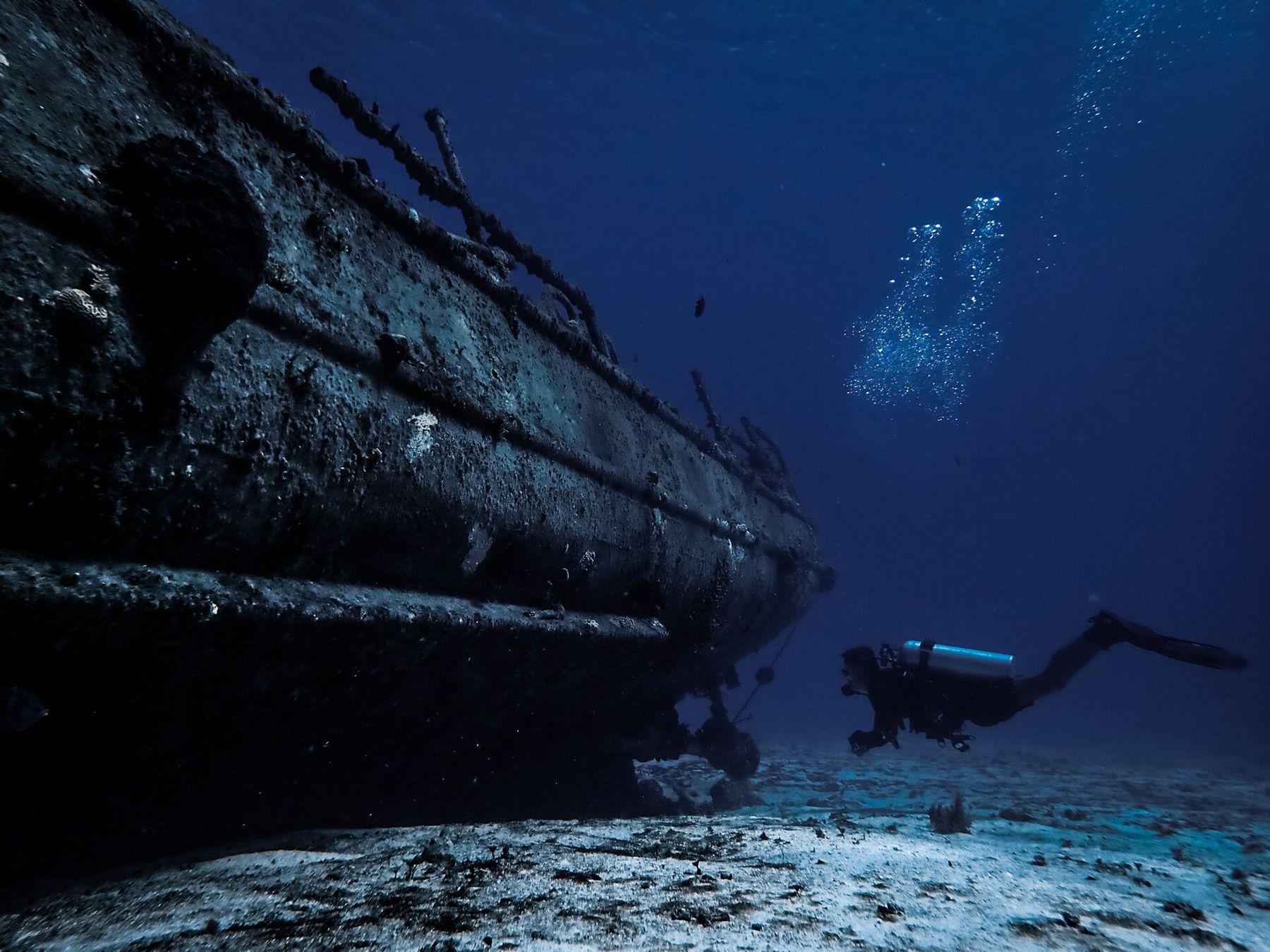
Out in the blue, eagle rays and turtles pass along the face, and schools of jacks or a lone barracuda sometimes hang off the edge. On the shelf behind the wall, the sand and coral heads hold the kind of life you see on the shallower reefs. Look into crevices for the splendid toadfish, which lives only around Cozumel and its nearby waters and is more often heard grunting than seen.
Turtles at Santa Rosa are often hawksbills, browsing on the sponges of the wall. Keep your distance, as the park rules require, and do not follow them down the face.
Conditions and the park
Santa Rosa is inside the Arrecifes de Cozumel National Park, so the park fee and rules apply: no touching, no gloves, no feeding, nothing taken. Fees and how they are collected change, so check before you go. Coral on the wall has been affected by stony coral tissue loss and bleaching in recent years, as on reefs across the Caribbean, but the sponges and the structure of the wall remain the main sight.
The header gives typical figures, never a promise. Water is warmest in late summer, coolest in winter; visibility is often superb but can drop after storms. In strong north winds the port can close to small boats. Conditions change daily, and the captain and dive guide decide whether to dive Santa Rosa and how.
When you log the dive, note the maximum depth, the time, the strength and direction of the drift and how much air you used. Wall dives use gas faster than shallow reefs, and a few entries side by side show how your consumption changes with depth and current. That record is useful the next time a guide asks how comfortable you are with a deep drift.
For a dive with a similar drift but lower, broader coral towers, compare the entry on Palancar further south.
Who shot these frames
- Matthewselig2019, CC0
- Diego Delso, CC BY-SA 4.0
- Illustrative image, AI-generated, not a photograph of a real place
- Nicomarinb, CC BY-SA 4.0