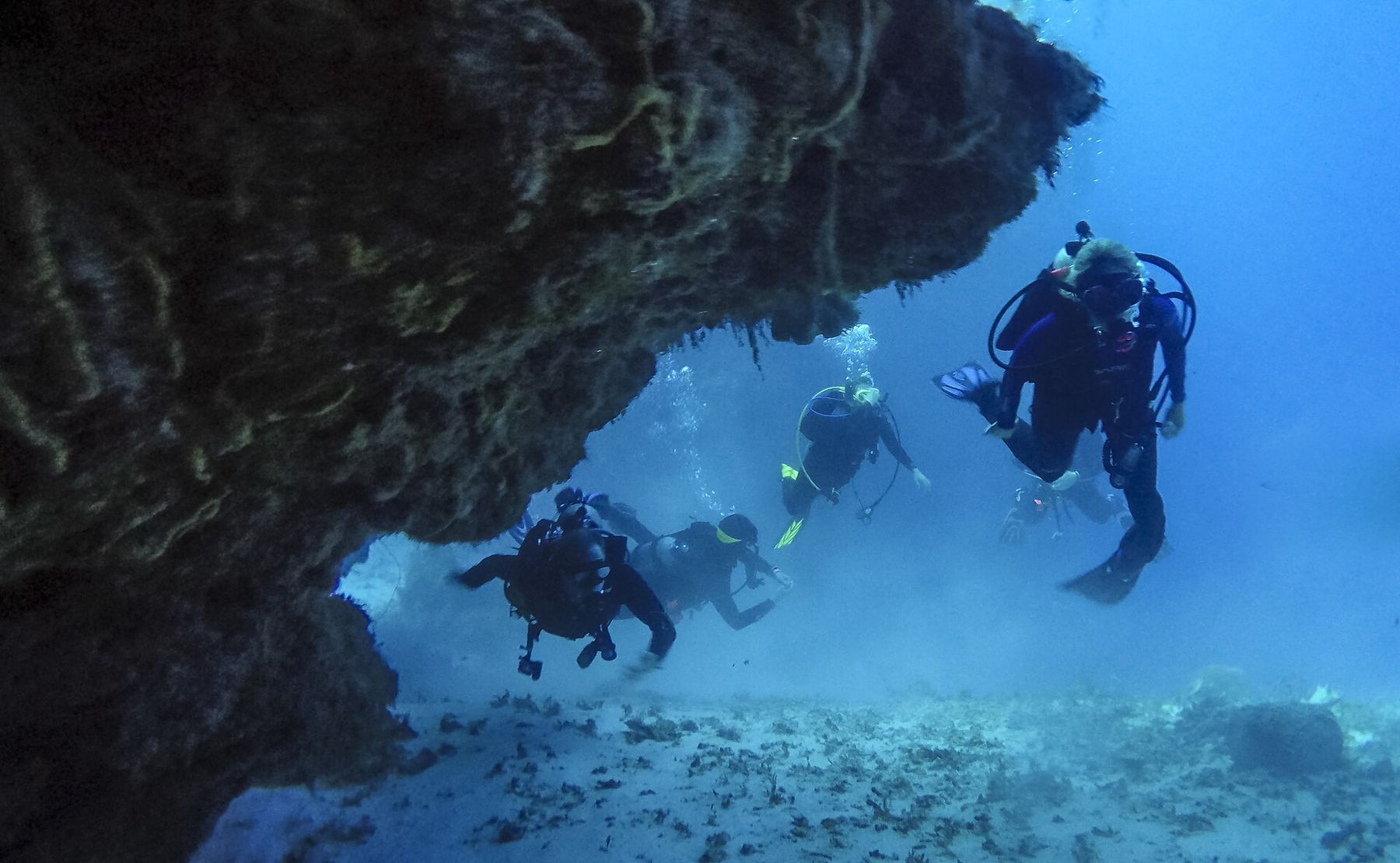
The pinnacles come up out of the sand like the pillars of a building that was never finished. Some are wider than a bus and taller than a house, honeycombed with tunnels, ringed by sea fans and sponges, with groupers hanging in the shade of their overhangs. That is Colombia reef, one of the southernmost of Cozumel's regular boat dives, and for many divers the most dramatic.
It sits south of the Palancar sections and north of the island's southern tip, on the edge of the shelf. Because it is further out and the ride is longer, it is usually the first and deeper dive of a two-tank morning.
The shape of the dive
A typical Colombia dive starts with a descent over sand to the base of the first pinnacle, then follows a line of them along the edge of the drop-off. The sand floor between them sits deeper than on many of the reefs further north, and the outer side of the pinnacles falls away into open water.
The dive guide chooses a depth and a route that suit the group and the current. You might weave between two pinnacles, pass under an arch, or hang off the outer face watching the blue. Swim-throughs are short and open at both ends; follow the guide, one diver at a time, and skip any you are not comfortable with.
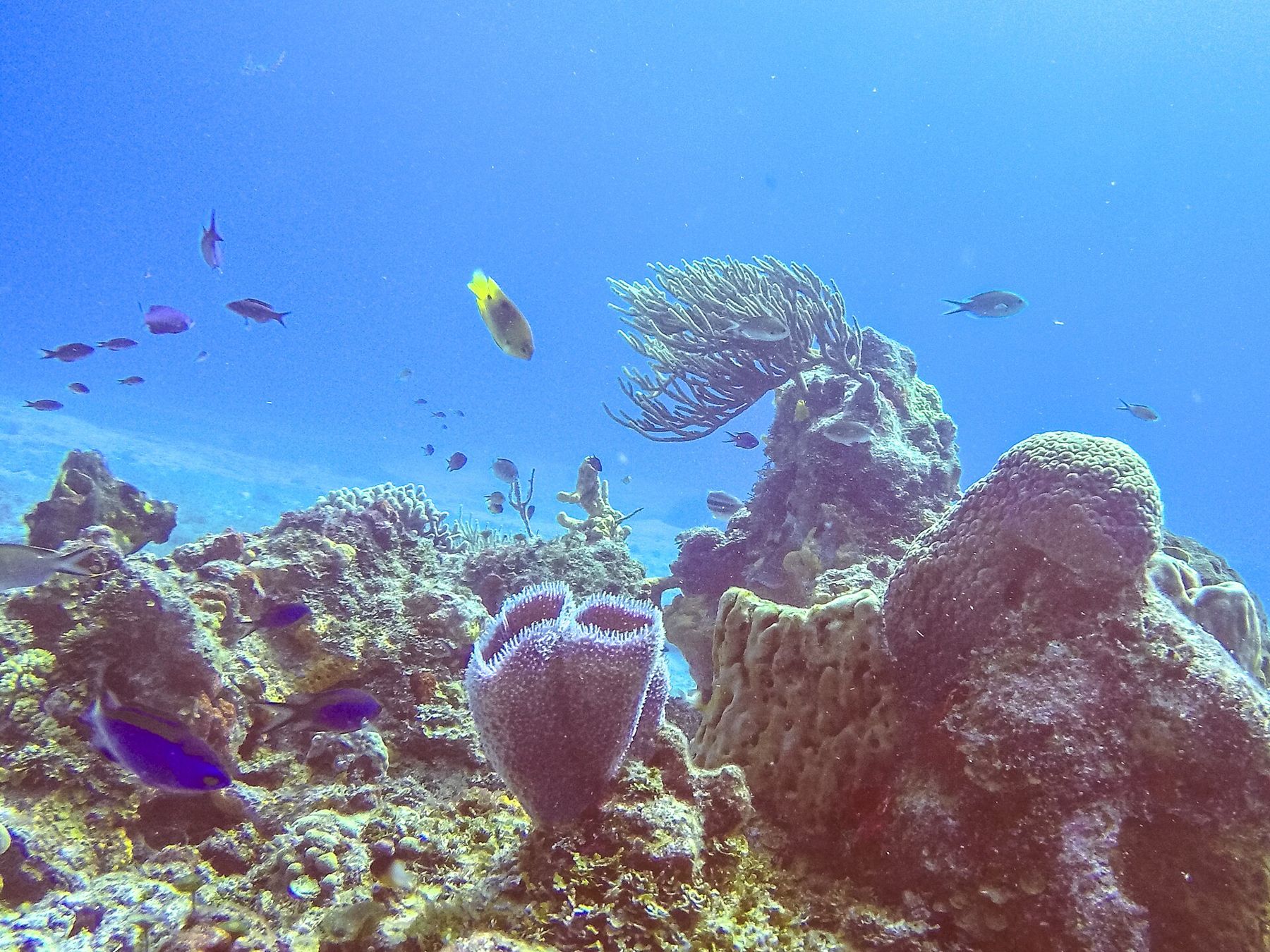
The pinnacles carry a lot of life. Barrel and vase sponges grow from the sides, sea fans lean into the current, and black coral shows in places on the deeper faces. In the overhangs, look for large groupers, lobsters and the occasional nurse shark resting on the sand.
Turtles, rays and the blue
Colombia has a reputation for big animals, and while nothing is ever guaranteed, it often lives up to it. Hawksbill and green turtles feed on the sponges and soft growth of the pinnacles. Spotted eagle rays cruise the drop-off, sometimes in small groups, and southern stingrays rest or feed in the sand between the towers.
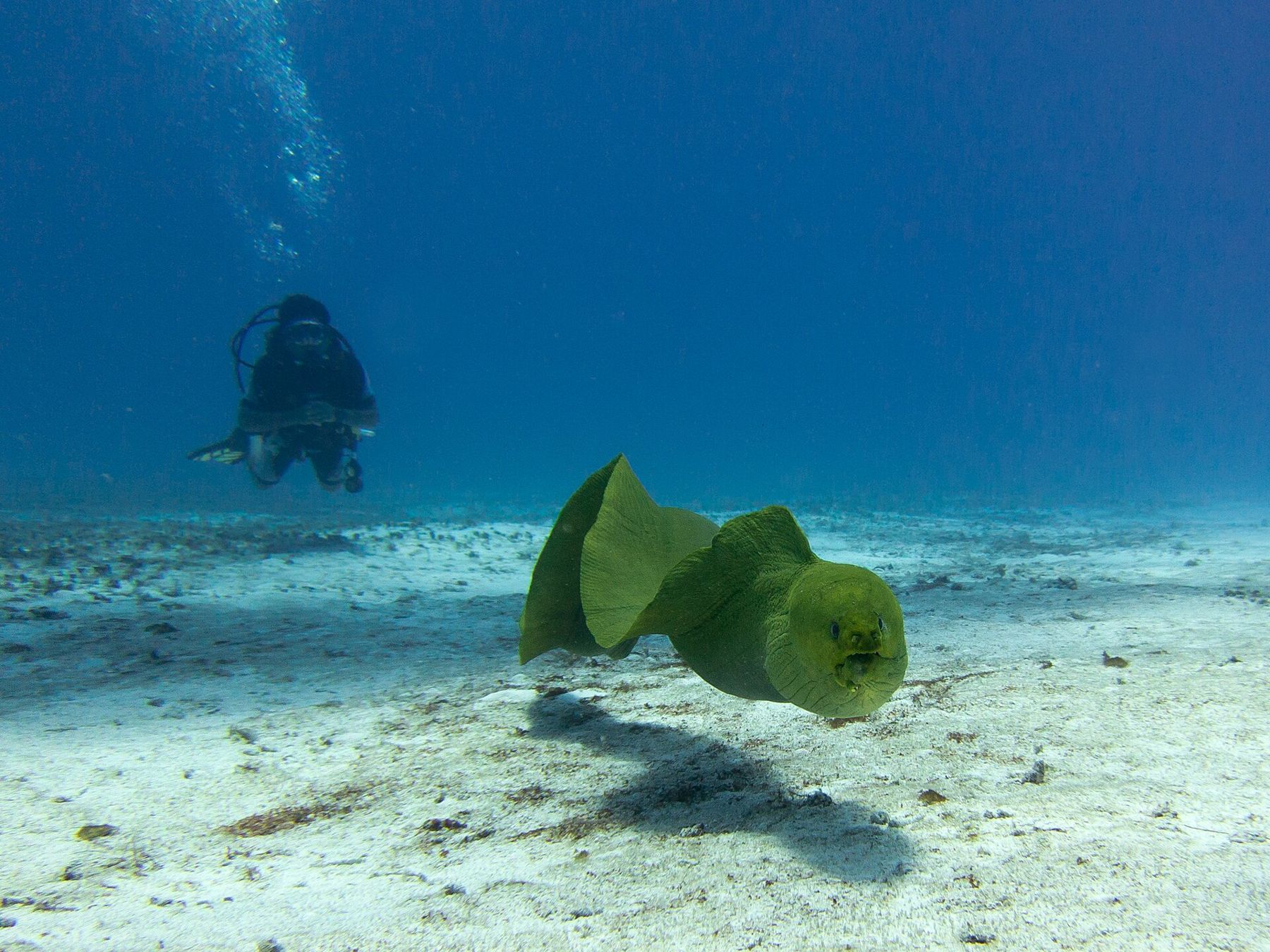
Green morays here leave their holes more often than you might expect, swimming in the open over the sand. Give them space, as you would any animal. Do not chase turtles or rays to get a closer look; a calm diver who stays put usually gets the better encounter, and the park rules forbid touching or harassing wildlife in any case.
Keep part of your attention on the blue side. Eagle rays, schools of jacks and the occasional barracuda pass along the edge, and it is easy to miss them while staring into a crevice.
Smaller things are easy to overlook among so much scale. Look closely at the sponges for tiny gobies and arrow crabs, at the sand for the outlines of flounder and lizardfish, and at the bases of the pinnacles for the splendid toadfish, a Cozumel speciality that usually shows only its striped head from a crevice. A small light helps under the overhangs, where colour fades with depth.
Current, depth and experience
The current near the south end of Cozumel can be strong. Some days Colombia is a gentle float; other days the group moves quickly and has to tuck in behind pinnacles to pause. Down-currents and changes in direction are possible near the edge. This is one reason Colombia is usually recommended for divers with some drift experience and solid buoyancy, rather than as a first dive after certification.
The pinnacles reward a diver who stays calm, stays close to the guide and lets the water set the pace. If how drift diving works is still new to you, a day on the shallower sites first is a sensible step.
Depth deserves the same care as at Palancar. The sand between the pinnacles is deeper than it looks and the clear water hides depth well. Agree a maximum depth at the briefing, check your computer often, and start the ascent with plenty of air in hand. Dive within your training and your computer's limits.
Colombia shallows
Closer to shore, on the inner side of the same area, lies a much shallower patch of reef often called Colombia shallows. It is a different dive entirely: low coral heads and sand at depths that suit a second dive, a newer diver or, on calm days, snorkellers from a boat. The current can still run here, so snorkellers usually go with a vest and stay with the guide.
The shallows are also where the light is best for colour. With less water overhead, the reds and yellows of sponges and fish stay bright, and a snorkeller floating at the surface can watch turtles feeding a few metres below.
Many boat trips that dive the deep pinnacles follow up with something shallow nearby, either the shallows or a sandy stop such as El Cielo, where sea stars lie on the sand in water you can stand in.
Practical notes
A good briefing for Colombia covers more than the route. Expect the guide to explain the maximum depth, the planned direction of the drift, what to do if you lose the group, when to start the ascent and how the safety stop will be made in open water. Ask questions on the boat rather than in the water, and if anything about the plan worries you, say so before you roll in.
The ride from the west coast marinas to Colombia is longer than to the reefs off San Miguel, and the southern end of the island can be choppier. If you are prone to seasickness, plan for it before you board. A warm layer is welcome on the boat between dives, especially in the cooler months.
The reef is inside the Arrecifes de Cozumel National Park, which charges a fee and sets rules for every visitor: no touching, no gloves, no feeding, and nothing taken. Fees and how they are collected change, so check before you go. In strong north winds the port can close to small boats, and long-range trips south are often the first to be cancelled.
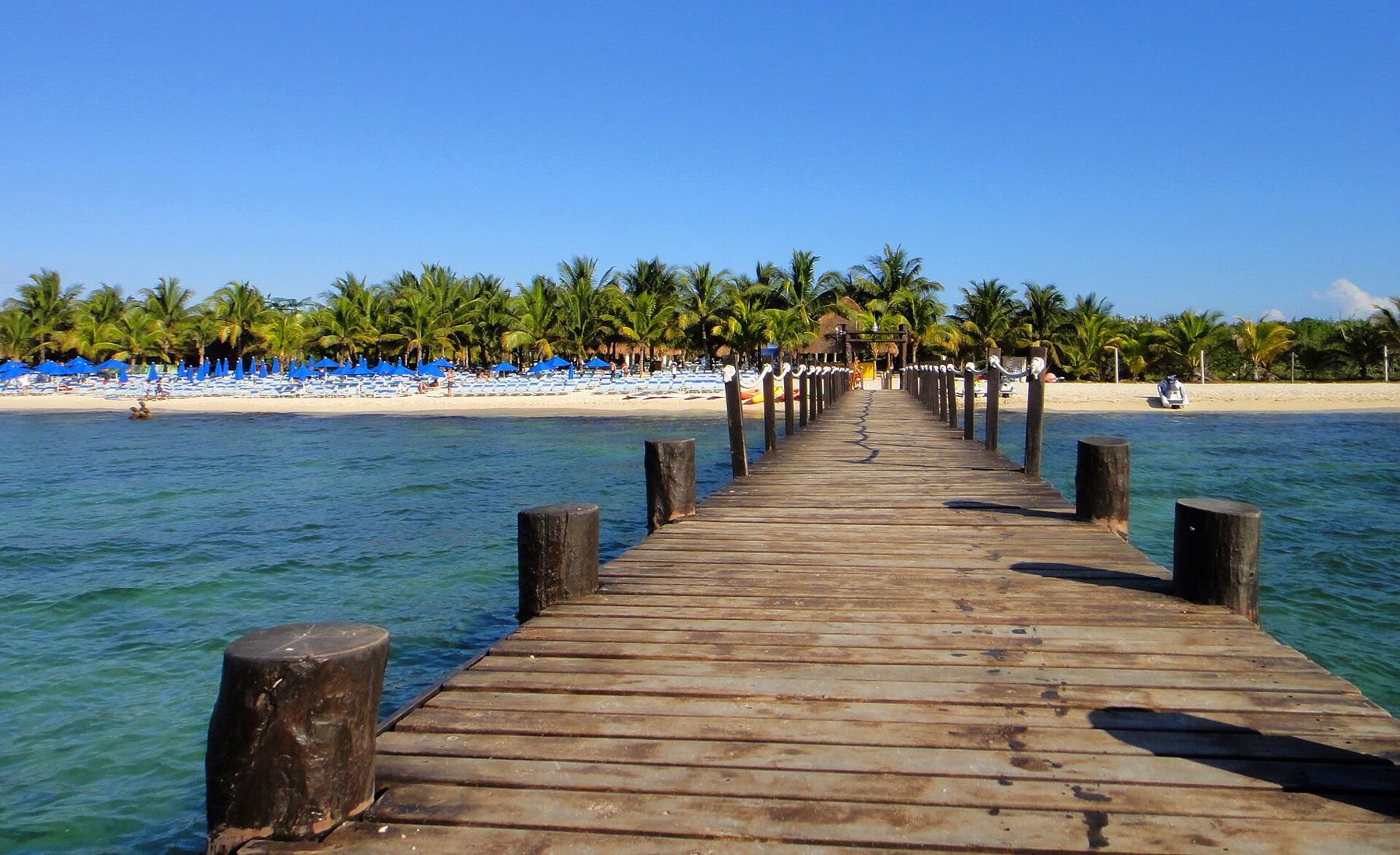
Between dives, boats often wait in calmer water near the shore or stop at a beach on the southwest coast. Use the time to drink water, get out of the sun and log the first dive while it is fresh: maximum depth, time, the direction of the drift and what you saw.
The pinnacles reward a diver who stays calm, stays close to the guide and lets the water set the pace.
The southern reefs, the lagoon and the lighthouse at the tip are covered in the entry on Punta Sur, which is worth reading if you want to see the southern end from land as well.
Everything on this page describes typical conditions. They change daily, and the boat captain and the dive guide decide whether Colombia is dived, at what depth and in which direction.
Who shot these frames
- Matthew T Rader, CC BY-SA 4.0
- Matthew T Rader, CC BY-SA 4.0
- P.Lindgren, CC BY-SA 3.0
- Serge Melki from Indianapolis, USA, CC BY 2.0